


Coral Reef Restoration by Ms. Samhita Veda Acharya
Ms Acharyaa is an ardent nature lover, she is actively associated with the Society for Andaman & Nicobar Ecology, where she leads outreach programs for school and college students. She also serves as the Convenor of the A&N Chapter of INTACH and has worked as a heritage consultant for the Andaman government. In addition to her scientific work, she is a filmmaker with over 20 films—many focusing on natural heritage—and has written children’s books to help young learners understand the ecological richness of the islands.
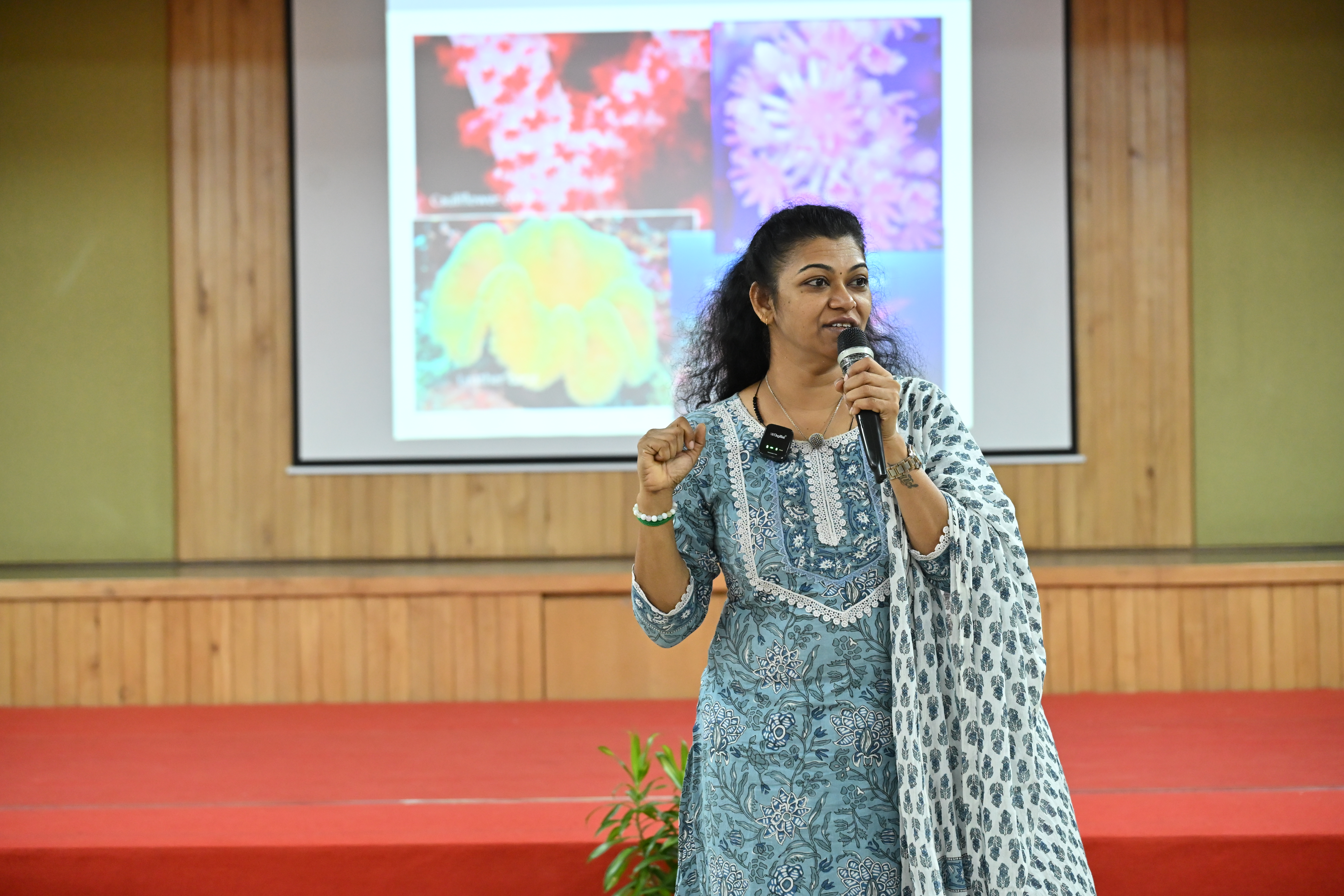
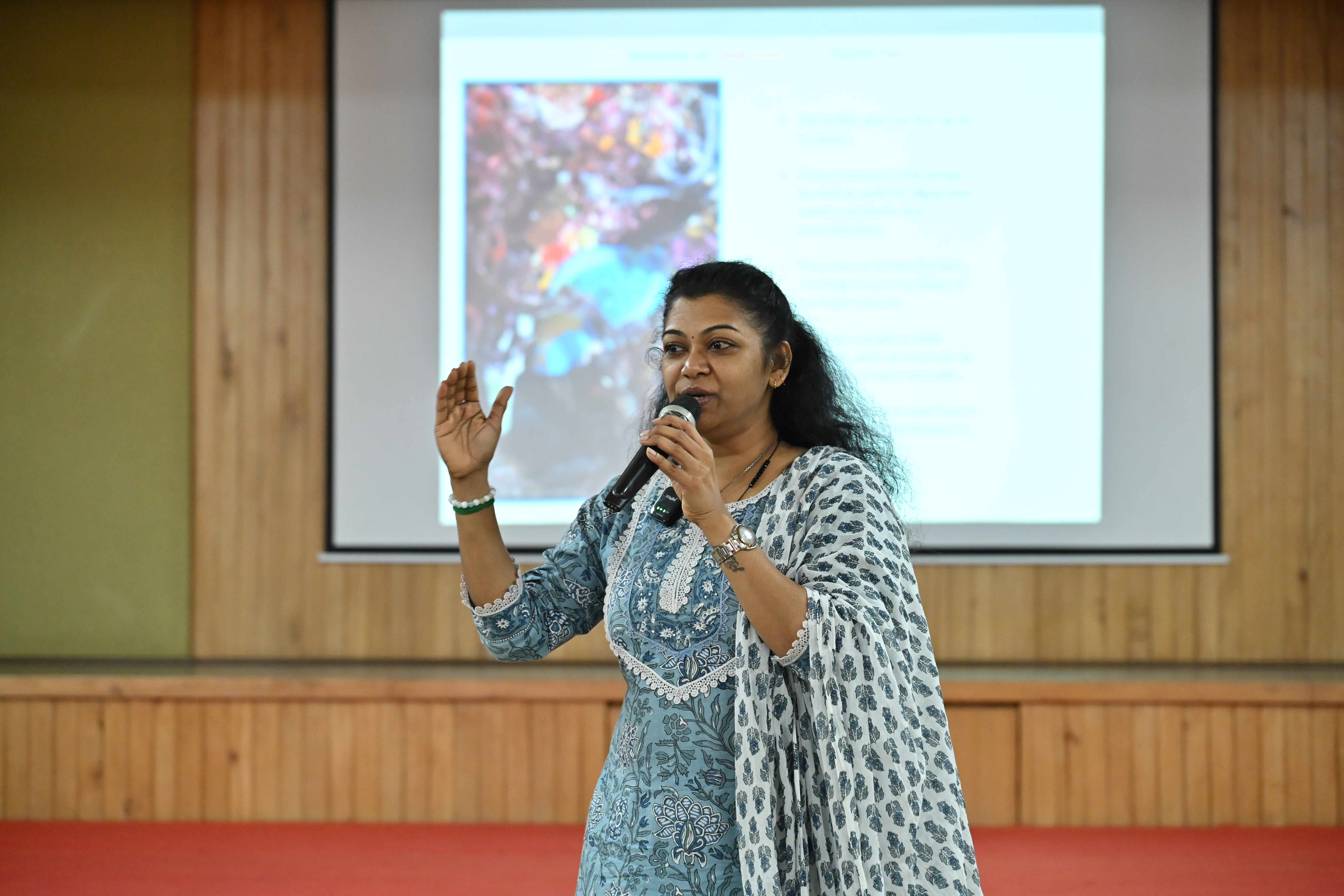
She began the session by helping students understand that corals, though they may look like plants, are actually living animals. She explained how coral reefs cover only a small part of the ocean but support a vast diversity of marine life and act as natural barriers that protect coastlines from storms and erosion.
Through engaging examples and visuals, students were introduced to different types of coral reefs such as fringing reefs, barrier reefs, and atolls. She also spoke about marine organisms like parrotfish and starfish, explaining their role in maintaining the balance of the ecosystem. Students found these examples especially interesting as they could see how closely connected marine life is.
A particularly interesting part of the session was when she spoke about the indigenous tribes of the Andaman Islands, such as the Jarawa and the Onge. She shared how these communities have lived in close harmony with nature for thousands of years. Their practices, like sustainable fishing and using natural resources carefully without overexploitation, reflect a deep understanding of the environment. This helped students realise that conservation is not just about modern science but also about respecting traditional knowledge and lifestyles.
Ms. Samhita also spoke about the threats faced by coral reefs due to human activities and natural causes. She introduced restoration methods like biorock technology in a simple and easy-to-understand manner.
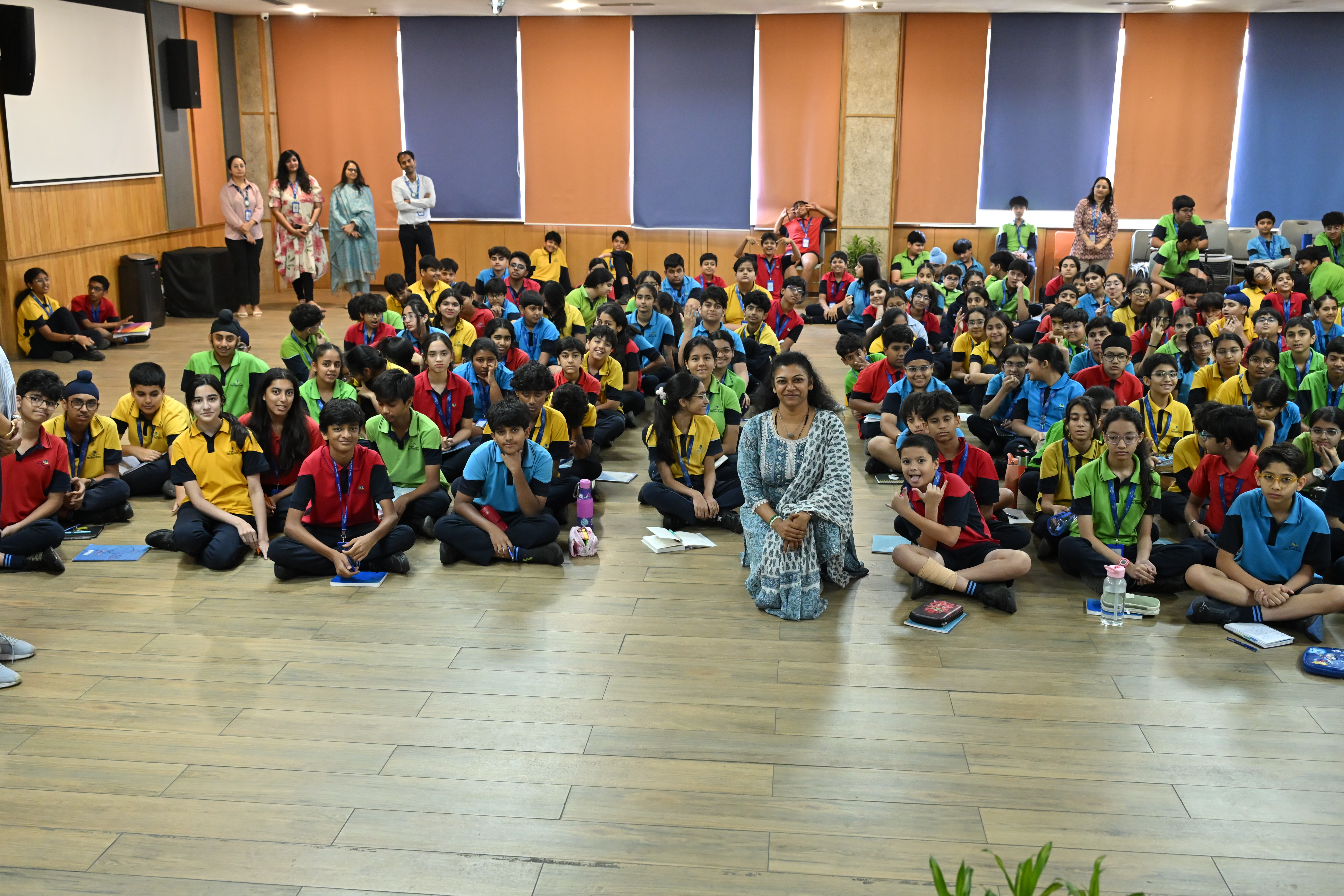
The session was engaging and insightful, leaving students with a better understanding of marine ecosystems and encouraging them to be more responsible towards the environment.