


Discover Sns
user_school
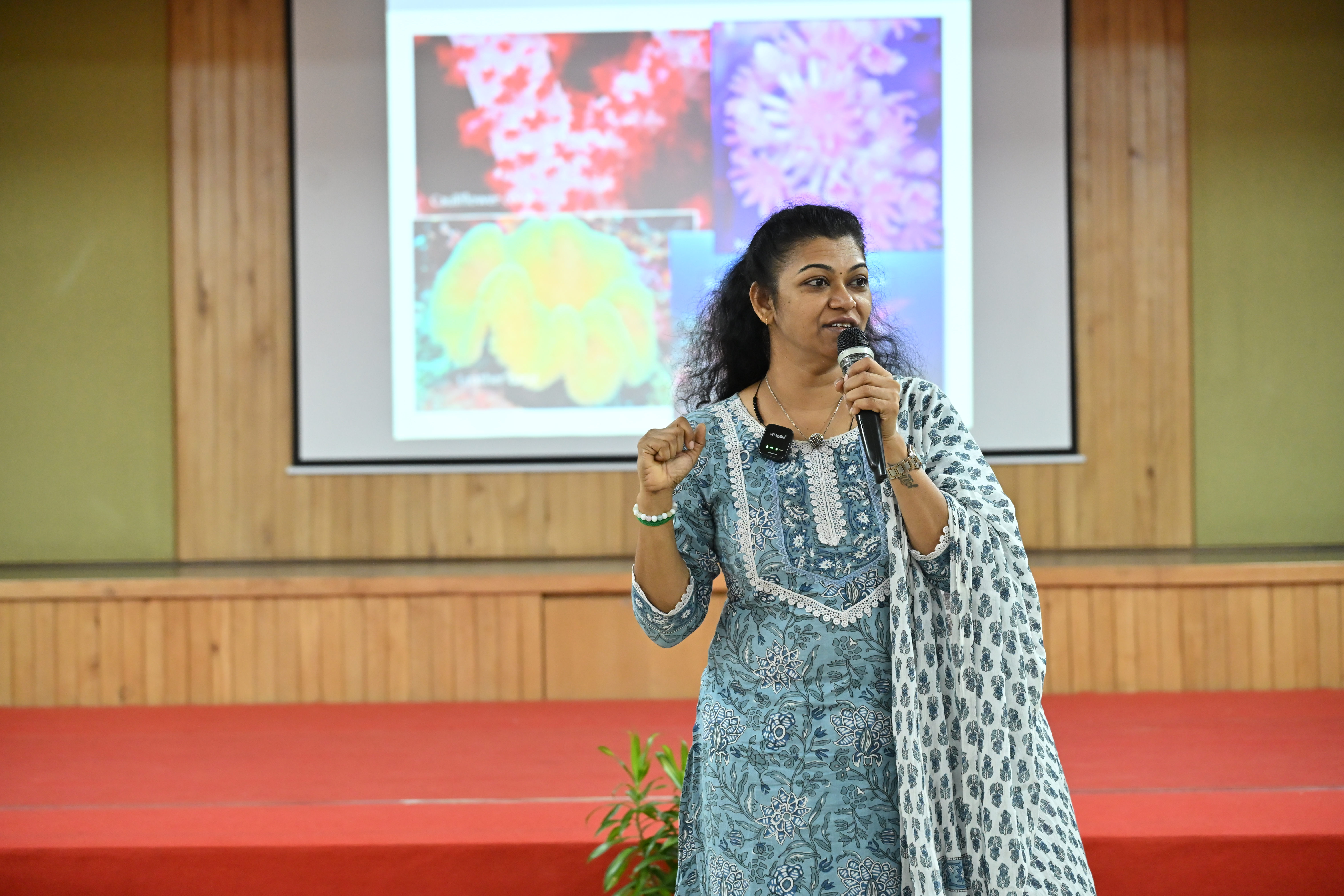
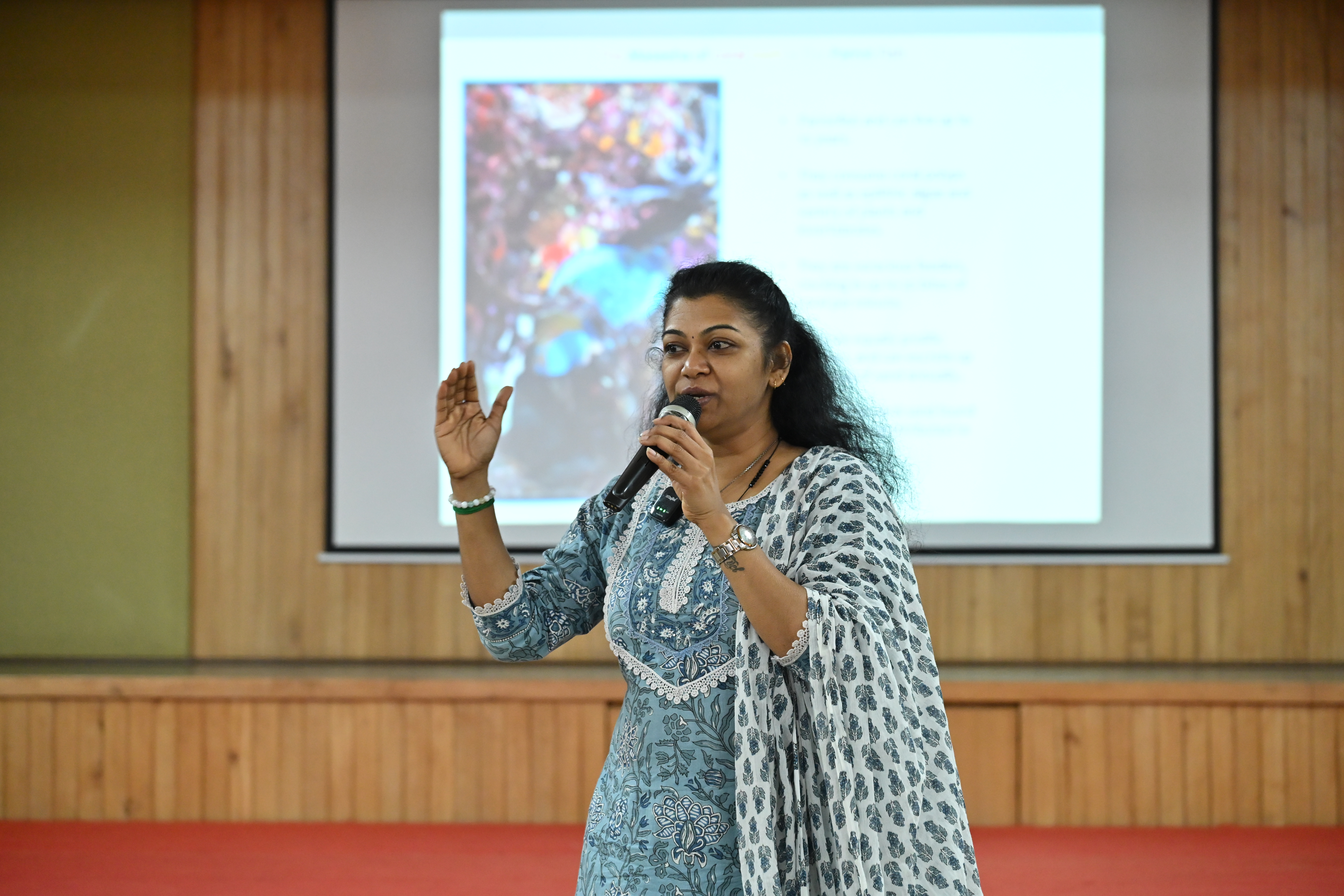
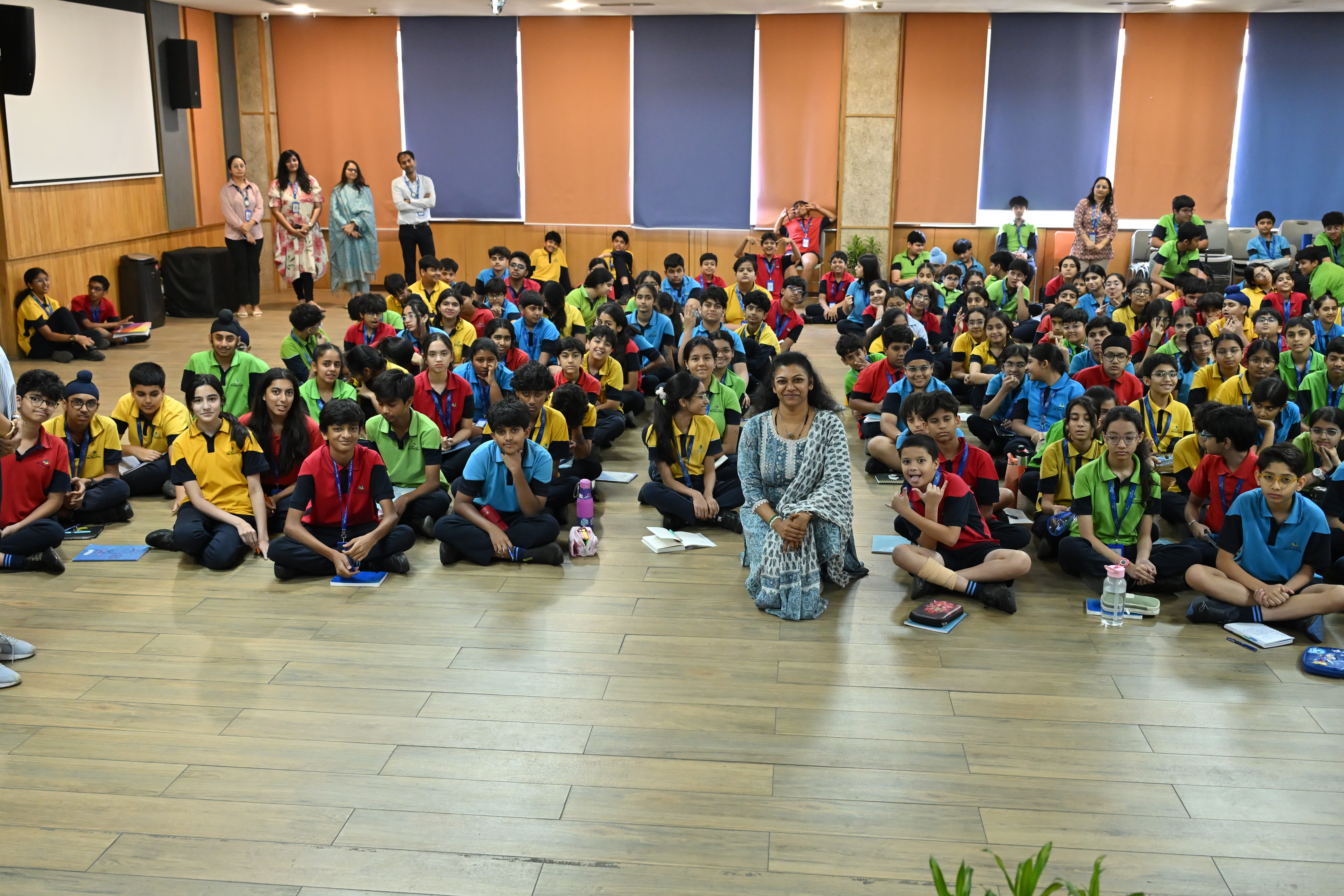
Coral Reef Restoration by Ms. Samhita Veda Acharya
Ms Acharyaa is an ardent nature lover, she is actively associated with the Society for Andaman & Nicobar Ecology, where she leads outreach programs for school and college students. She also serves as the Convenor of the A&N Chapter of INTACH and has worked as a heritage consultant for the Andaman government. In addition to her scientific work, she is a filmmaker with over 20 films—many focusing on natural heritage—and has written children’s books to help young learners understand the ecological richness of the islands.
She began the session by helping students understand that corals, though they may look like plants, are actually living animals. She explained how coral reefs cover only a small part of the ocean but support a vast diversity of marine life and act as natural barriers that protect coastlines from storms and erosion.
Through engaging examples and visuals, students were introduced to different types of coral reefs such as fringing reefs, barrier reefs, and atolls. She also spoke about marine organisms like parrotfish and starfish, explaining their role in maintaining the balance of the ecosystem. Students found these examples especially interesting as they could see how closely connected marine life is.
A particularly interesting part of the session was when she spoke about the indigenous tribes of the Andaman Islands, such as the Jarawa and the Onge. She shared how these communities have lived in close harmony with nature for thousands of years. Their practices, like sustainable fishing and using natural resources carefully without overexploitation, reflect a deep understanding of the environment. This helped students realise that conservation is not just about modern science but also about respecting traditional knowledge and lifestyles.
Ms. Samhita also spoke about the threats faced by coral reefs due to human activities and natural causes. She introduced restoration methods like biorock technology in a simple and easy-to-understand manner.
The session was engaging and insightful, leaving students with a better understanding of marine ecosystems and encouraging them to be more responsible towards the environment.
(A)round Tables: Conversations on Digital Safety & Wellness
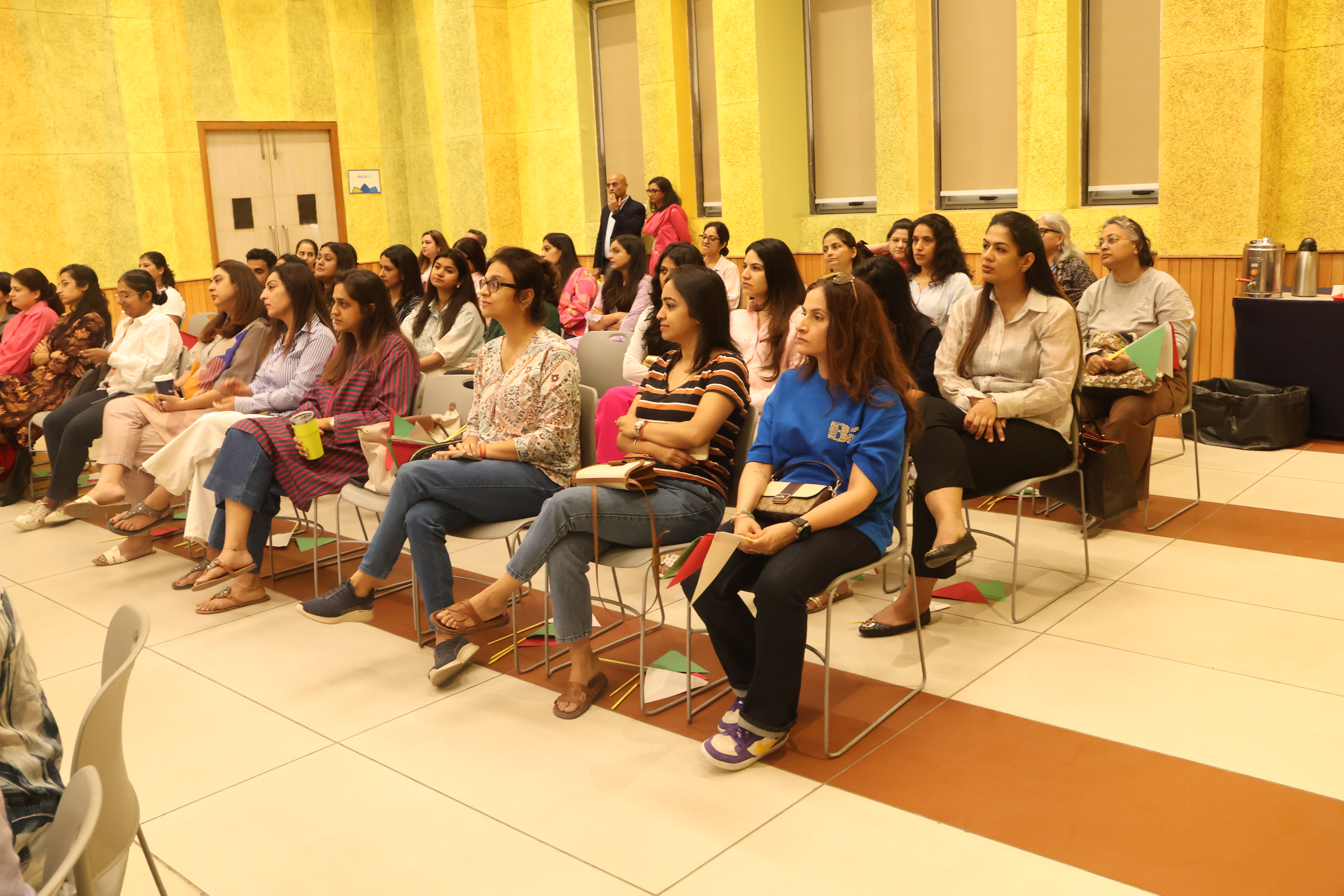
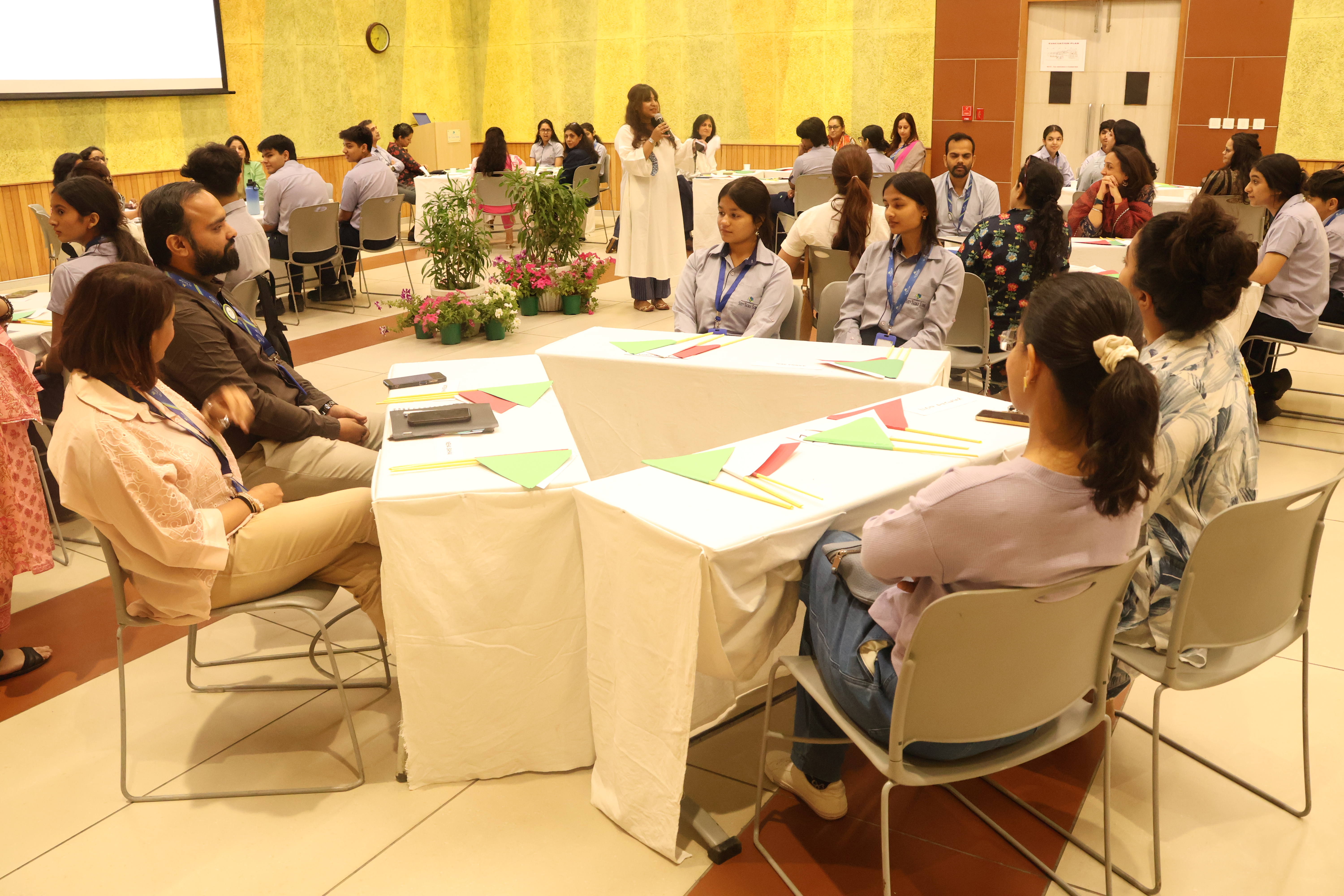
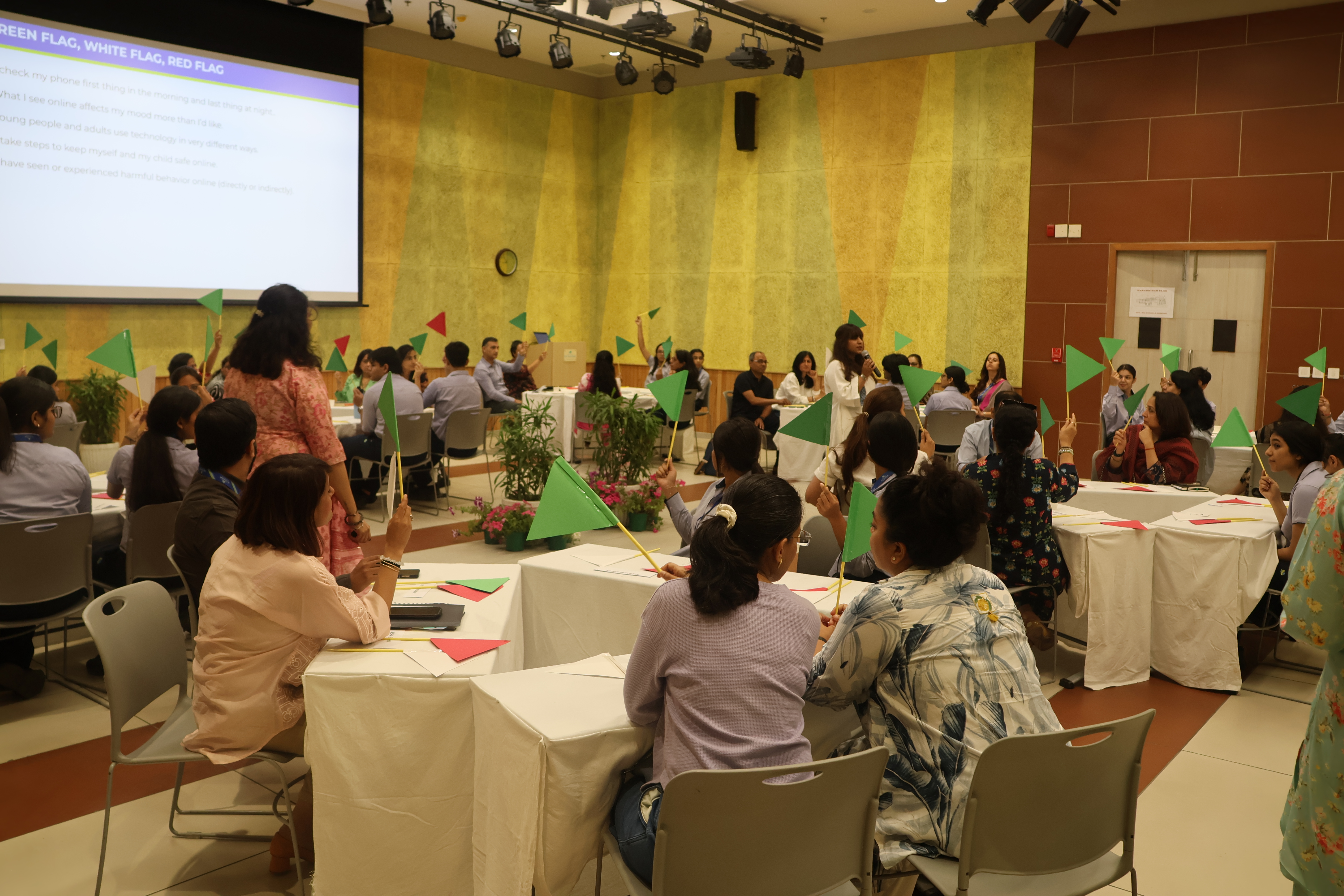
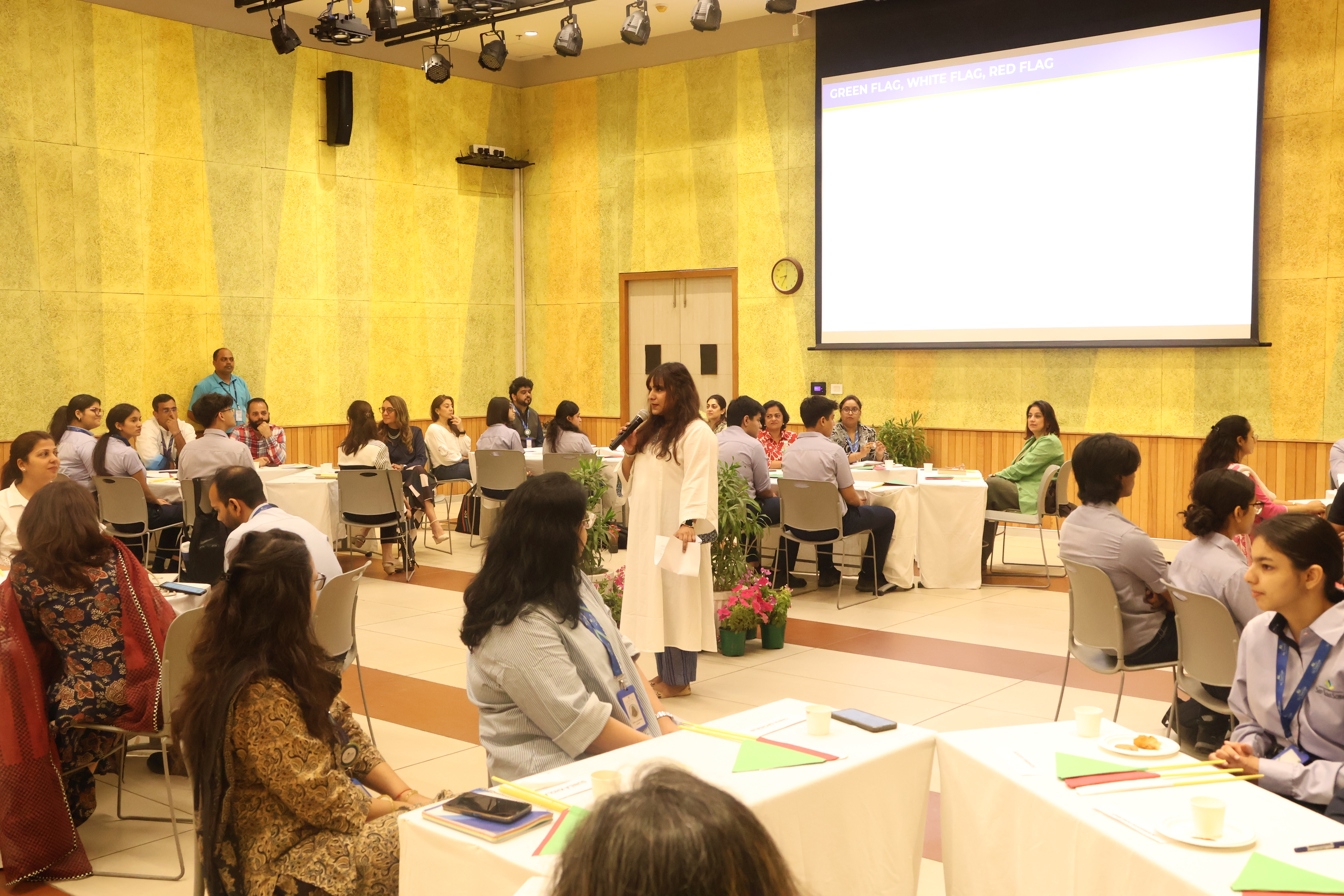
The Counselling Team hosted a Coffee Morning that brought together parents, students, educators, and in-house tech experts to engage in meaningful dialogue on digital safety and wellness. The event saw active participation from 60 parents, 17 students, and 14 educators and experts, fostering a diverse and inclusive exchange of perspectives.
Participants were seated at round tables to encourage open conversation, with additional attendees contributing as part of the audience. A unique interactive format was used, where participants responded to prompts using coloured flags—red for disagreement, green for agreement or support, and white for neutrality. This approach promoted active listening, reflection, and peer validation throughout the session.
The event began with a quick-response activity designed to elicit initial thoughts and experiences related to digital habits and online safety. Statements about screen use, emotional impact of online content, and awareness of digital safety sparked immediate engagement and honest reflection.
This was followed by deeper discussions at and across tables, guided by thought-provoking questions on themes such as:
- The balance between care and control in technology use
- Adult concerns about children’s digital engagement
- Building trust and openness for young people to seek help
- Shared responsibility in creating safer digital spaces
The conversations were dynamic and insightful, reflecting a wide range of experiences and viewpoints. Participants identified both common ground and areas of differing opinion, enriching the overall dialogue.
While the session raised several important questions, it was positioned as a starting point for ongoing engagement. The insights gathered will inform future initiatives and help the school address key concerns in collaboration with the community.
Overall, the event successfully created a space for thoughtful reflection, meaningful dialogue, and strengthened community connections around an increasingly important aspect of student wellbeing.
The Scindia Model United Nations (SCIMUN) 2026
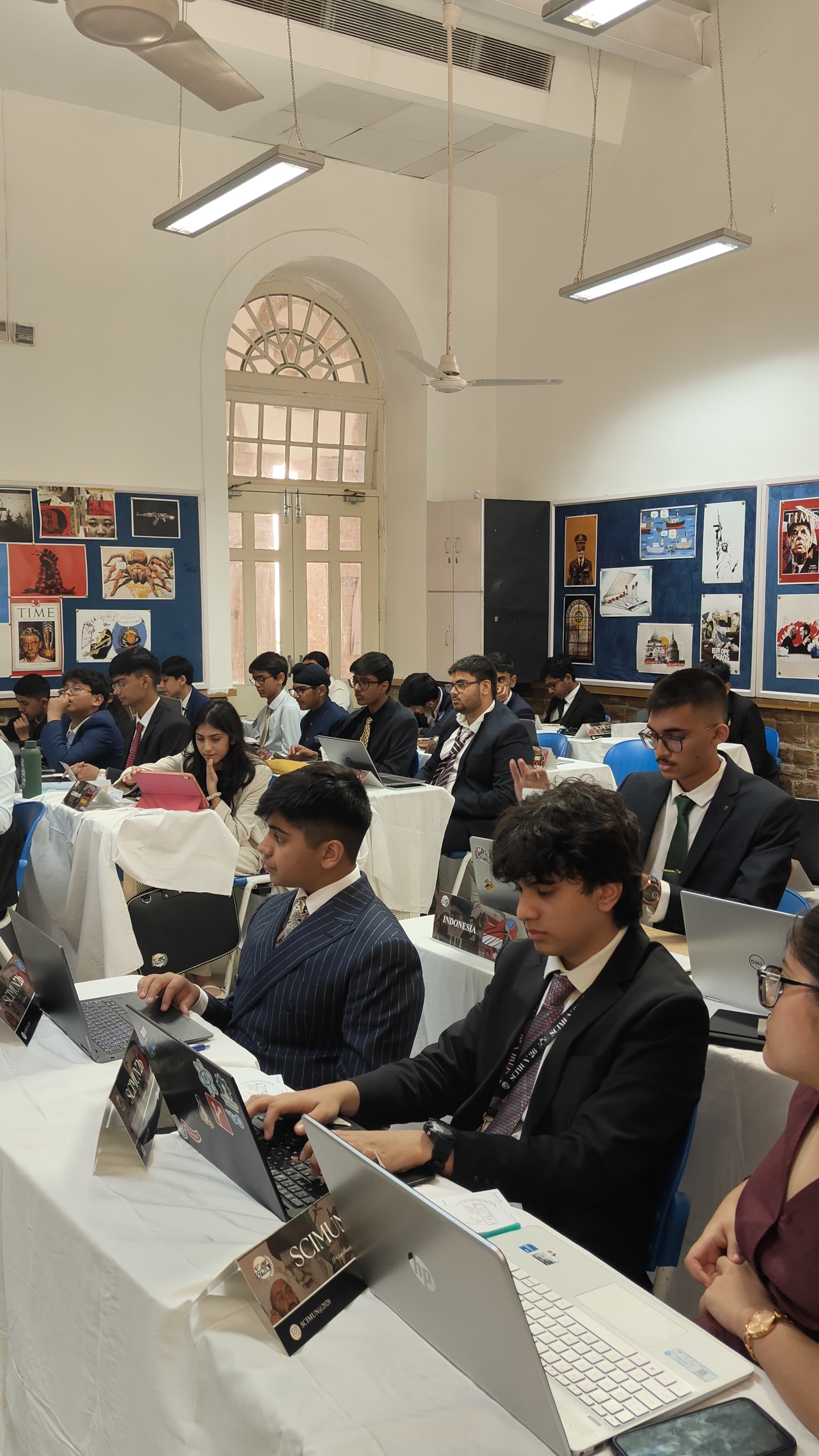
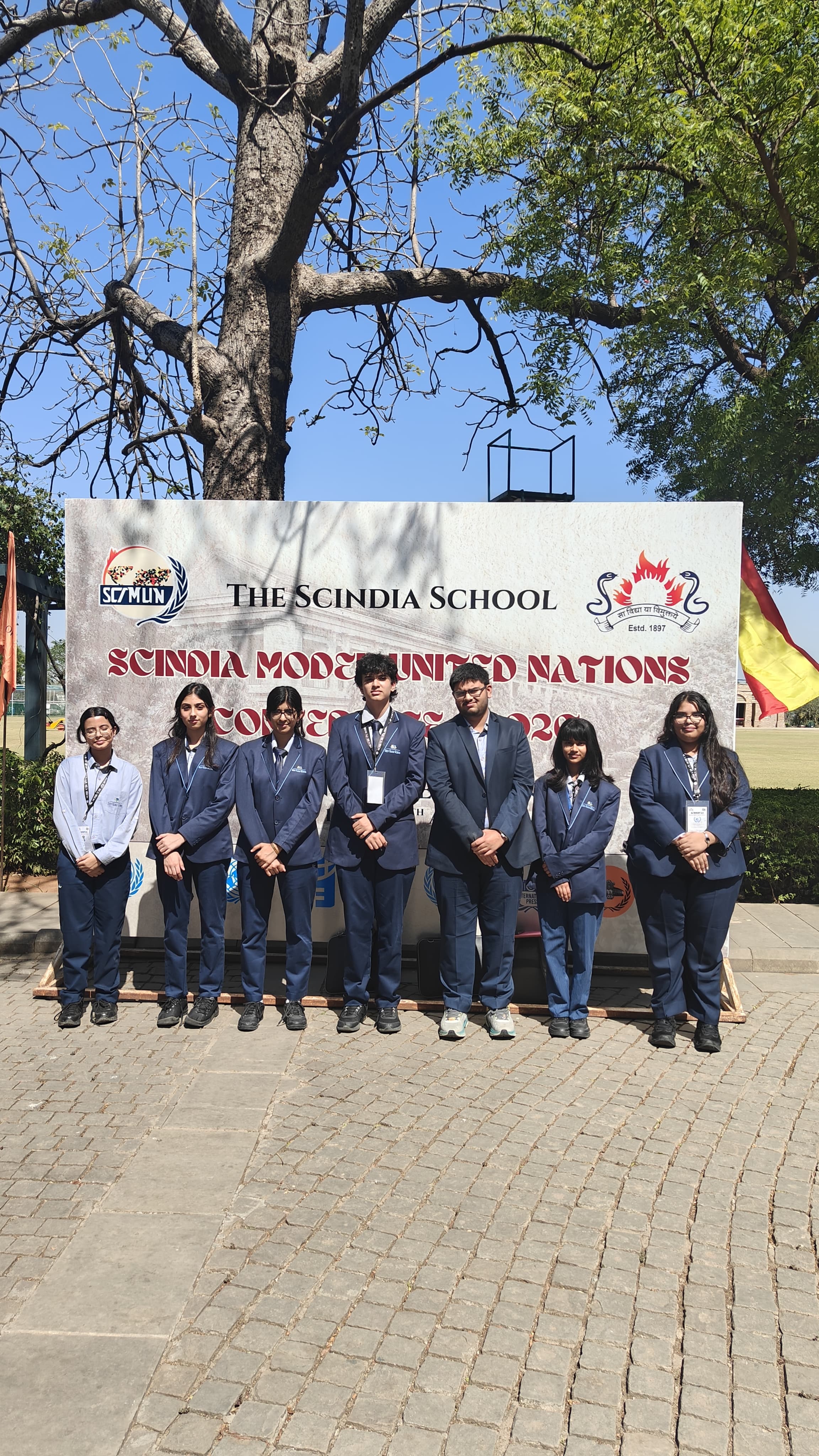
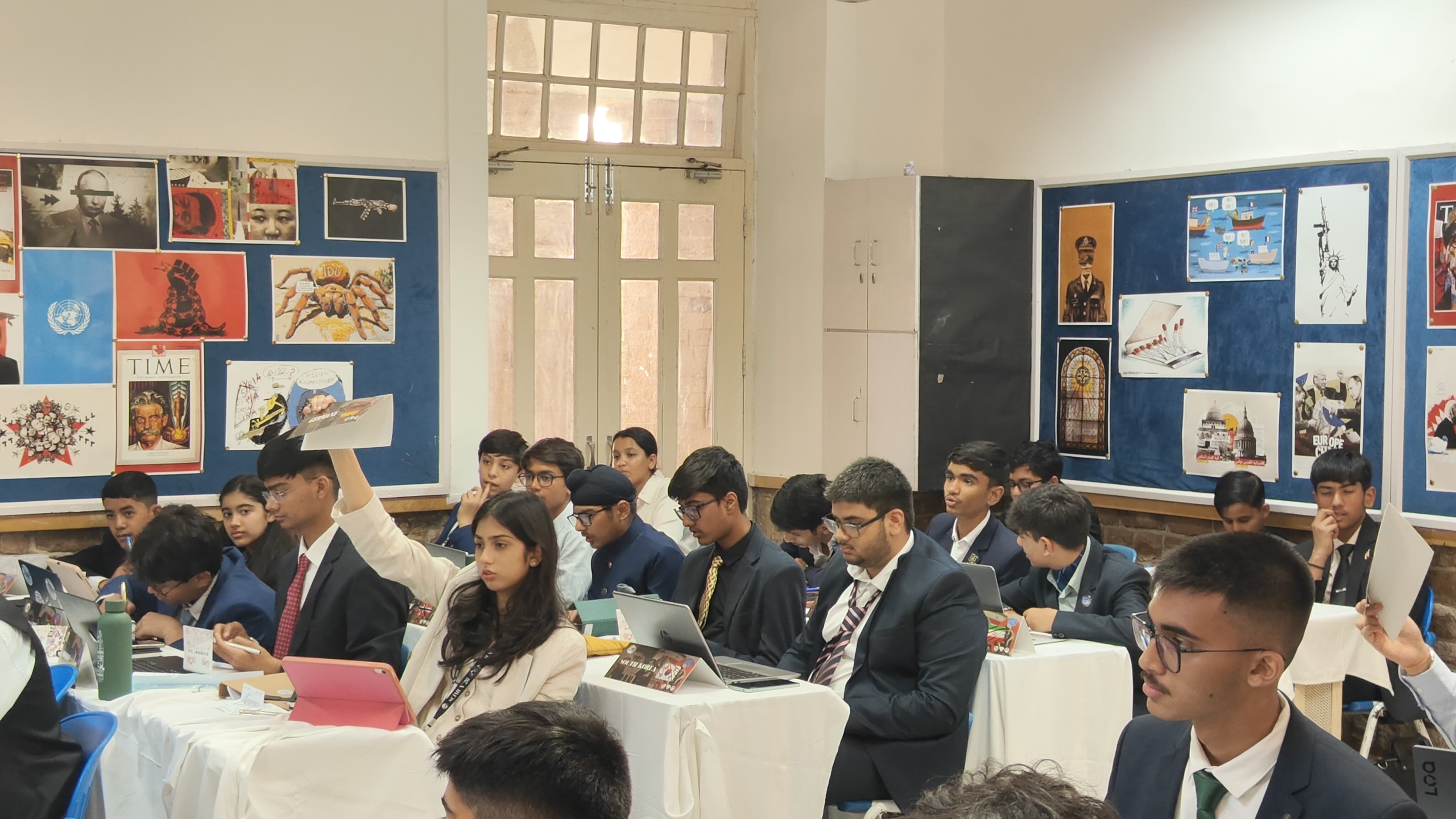
The Scindia Model United Nations (SCIMUN) 2026, held from 10 to 13 April in The Scindia School, Gwalior, provided a dynamic platform for students to engage in the simulation of the United Nations. The conference aimed to foster global awareness, critical thinking, and diplomatic skills through structured debates and collaborative problem-solving on contemporary global issues.
A delegation of seven students from our school - Aarav Kar, Daksh Vohra, and Enakshika Yadav (Grade 11), along with Veerangana Singh, Tvarita Gupta, Aanya Roy, and Avishi Roy Manu (Grade 10) - participated with enthusiasm and dedication. Representing diverse portfolios across committees, the students were selected through a rigorous screening and preparation process, demonstrating strong research abilities, clarity of thought, and confidence in articulation.
Throughout the conference, the delegates actively contributed to both formal and informal sessions. They engaged in meaningful discussions, presented well-reasoned arguments, and demonstrated effective negotiation and collaboration skills. Their ability to respond insightfully to differing viewpoints and work towards consensus reflected a strong understanding of diplomatic processes.
The delegation’s performance was widely appreciated, earning the following accolades:
Awards and Achievements:
- Best Delegate (UNSC): Daksh Vohra was applauded for exceptional leadership, in-depth understanding of the agenda, and impactful contributions.
- Best Delegate (UNICEF): Tvarita Gupta was honoured for an outstanding performance and achieving her first Best Delegate award.
- Verbal Mention (UNSC): Veerangana Singh was commended for consistent engagement and meaningful participation in committee discussions.
Participation in SCIMUN 2026 proved to be a highly enriching experience, enabling students to strengthen essential skills such as critical thinking, public speaking, research, and teamwork. The conference also encouraged them to develop a broader perspective on global issues, appreciate diverse viewpoints, and engage in respectful dialogue.
Collectively, the delegation’s commendable performance brought pride to the school and reinforced the value of experiential learning platforms like Model United Nations in nurturing confident, informed, and globally aware individuals.