Space Exploration and Beyond: Astronaut Rakesh Sharma Inspires Students of Shiv Nadar School

Out of the billions of possible combinations, there is one planet whose satellite is about 400 times smaller than its star and around 400 times closer, perfectly covering the star's face whenever it passes between the two – what are the odds! When we contemplate our universe, there is immense knowledge to uncover.

Recently, the Shiv Nadar School community had an extraordinary experience of an engaging fireside chat at the Noida campus with Wing Commander Rakesh Sharma, the first Indian to venture into space.

The conversation began with him highlighting the importance of holistic education and emphasising that a comprehensive approach to learning is crucial for students' overall development. He appreciated how students are a part of the curriculum process at Shiv Nadar School and mentioned that it is the right approach because the younger generation is more in touch with how they want the world to be. This generation is observant and confident enough to translate thoughts into action. His words resonated with all students and parents, a powerful call to action: dream big, embrace challenges, and protect our precious planet. Here are a few highlights from his address.

Don't let the size or complexity of any task hold you back

Wg Cdr Sharma’s journey to space is a testament to perseverance. He mentioned, "Don't let the size or complexity of the task inhibit you from trying. If you don't try, you will never know." This message is just as relevant in the classroom; fear of failure shouldn't be a barrier to exploration and learning.

Embrace the unknown

Space, with its endless mysteries, is a metaphor for the vastness of knowledge. He reminded the students about the need to have an open mind and admit that we don't know enough. This is a crucial lesson for fostering a love for lifelong learning and scientific discovery.

A world beyond gender

"I envision a future where gender would be a non-issue."

He mentioned that we need the brightest minds to work together and solve the world's toughest challenges. We can achieve this by removing the barriers of gender inequality. Only then will everyone have a fair chance to shine.

Protecting our planet

"The most beautiful moment," he shared, "was admiring the vastness of space and understanding that the Earth, our home planet, is the only planet we will live on for the foreseeable future.”

Having witnessed Earth from the unique perspective of outer space, he stressed the importance of environmental stewardship. His call to action is clear: explore space responsibly and focus on protecting our celestial neighbours.

The message to the students was about igniting a passion for learning, pushing boundaries, and becoming responsible global citizens—a powerful reminder of the infinite possibilities ahead of us.

Empowering Students Through Art: The Shiv Nadar School Approach

Art is often seen as an escape from the mundanity of life, but what if it leads to self-discovery and empowerment?

In the Shiv Nadar School Podcast episode 2, Arya Mohapatra, a Grade 12 student from the Noida campus, engaged in an engaging conversation with Ms Manjima Chatterjee, Vice Principal of the Noida campus and Head of Art Curriculum across all campuses, about the transformative power of Art education. The discussion explored its profound impact on personal growth, academic achievement, and overall individual development.

A Journey Rooted in the Art

Ms Chatterjee's journey in Art began in a Bengali household in Calcutta, where she was immersed in music, visual art, and dance from a young age. At four, she was enrolled in visual art classes, followed by dance at six and music at seven. Although she had performed in plays since the age of eight, it wasn’t until Grades 9 and 10 that she was formally introduced to theatre. This early exposure shaped her understanding and appreciation of various art forms.

The artistic experiences instilled in her a sense of discipline, coordination, and a connection with her surroundings. In conversation with Arya, she emphasised how Art education transcends the classroom, fostering a multilingual and culturally rich perspective.

The Impact of Art on Personal Growth

Art education fosters a rigorous and disciplined approach to learning. It helps individuals become more coordinated, enhances their relationship with their bodies, and instils respect for the environment. For example, Bharatnatyam was instrumental for Manjima in developing physical coordination and fostering a comfortable relationship with her body. Art can also teach multilingualism, broadening linguistic capabilities and deepening her cultural appreciation.

Art as a Medium for Authentic Expression and Human Connection

Art exists at the intersection of social, economic, and psychological forces, functioning as both an internal and external medium. While our thoughts are often shaped by external influences, such as societal expectations and conditioning, art allows us to express our innermost feelings authentically. It offers a space to be our truest selves.

Through a pedagogy that embraces this artistic freedom, we can create an environment where individuals explore their identities, express themselves freely, and critically engage with the world around them. Art education thus becomes a powerful tool for personal growth.

Artistic expression doesn’t conform to standardised outcomes; it is deeply individual and meaningful to the creator. It transcends rational understanding, whether through the raw, clinical lines of Picasso’s Guernica, which evoke deep distress, or a dance performance that moves one to tears without explanation. It connects individuals on an emotional level, fostering a sense of shared humanity. The challenge is to translate this profound emotional exchange into the classroom, creating a space where trust and genuine human connection can flourish through art.

Emancipatory Pedagogy: The Power of Art in Education

Art has a unique ability to disrupt the structured, time-bound nature of classrooms, which are often constrained by syllabi and rigid frameworks. Introducing art into these spaces can challenge these limitations, making learning playful and flexible—something that can be taken apart and reassembled in new forms. This approach embodies emancipatory pedagogy, where art serves as a liberating force, free from the constraints of predefined roles or outcomes. Initiatives like Project Zero’s Making Thinking Visible protocols demonstrate how we can retain art’s disruptive power while integrating it with structures that help us make sense of the world. The balance lies in leveraging art’s capacity to evoke deep, unexplainable emotions and its ability to dissolve stress, as seen in experiences like using dance to enhance academic performance. Through this, art education becomes a transformative force, enabling students to connect with themselves and the world in ways that no other activity can.

Rethinking the Traditional Education System through the Art

The traditional education system was designed to build individuals who could follow rules and processes, much like workers in factories or offices. While this approach made sense in a world with known rules, it is inadequate in today’s constantly shifting landscape. Art education offers a solution by fostering creativity and innovation, enabling students to navigate an unpredictable world. This shift is about creating spaces that encourage free thinking and problem-solving. For instance, at Shiv Nadar School, students studying the architecture of Delhi during the Sultanate period engaged in a STEAM project where they explored the subject through Art. They asked questions, created models, and learned through hands-on experiences, making the knowledge more tangible and memorable.

The Role of Art in Learning and Building Confidence

Art plays a crucial role in helping students absorb and retain academic information. Unlike rote learning, where students might struggle to recall information during exams, art-based projects allow students to experience and internalise concepts. This approach makes it easier for them to logically apply their knowledge when faced with exam questions. Beyond academics, art also builds self-confidence. For instance, a student who might feel nervous speaking on stage might find comfort and confidence in performing through dance. This confidence, cultivated through art, often translates into other areas of life, enabling students to express themselves more freely and confidently in various settings.

Art as a Foundation for Growth

Art is not just an academic subject but a cornerstone of a person's development. Pablo Picasso once said, "Every child is an artist when they're born. The challenge is to remain an artist as you grow older." Art encourages them to discover and express what they already know, challenging them to think creatively and independently. This sense of self-assurance is vital, especially as students grow older and face more complex challenges in life.

The Future of Art in a Digital Age

The conversation around AI and its potential to take over creative jobs is a topic of much debate. While AI can replicate and even enhance certain tasks, the essence of creativity remains a distinctly human trait. Drawing on Isaac Asimov’s futuristic visions, it’s clear that while robots and AI can perform many functions, there is a fundamental difference between mere thought and true art. Art, by its nature, is deeply rooted in emotions and experiences, making it something that cannot be easily replicated, even by another human, let alone a machine. AI may excel in tasks like replicating designs or solving technical problems, but it lacks the capacity for the unpredictable sparks of inspiration and the serendipitous mistakes that often lead to groundbreaking inventions. The human mind, with its ability to think beyond straight lines and predefined pathways, drives true creativity. While AI can support and build upon what is already known, it is unlikely to replace the unique creative process that defines human expression.

Art Curriculum at Shiv Nadar School

The Art curriculum at Shiv Nadar School is a unique and comprehensive programme meticulously developed by a team of Art practitioners from across the school’s campuses. Drawing inspiration from global best practices, the curriculum reflects standards from diverse regions such as Scotland, Japan, Korea, the United States, and several European and African countries. It also incorporates elements from renowned educational frameworks like the International Baccalaureate (IB) and Cambridge (CIE), which offers the IGCSE curriculum and follows India’s National Curriculum Framework (NCF). This rigorous approach ensures that students at Shiv Nadar School receive an Art education that is integral to their academic learning and on par with the highest global standards. What sets this curriculum apart is its deep integration of the Art into the core educational experience, a commitment that is relatively rare in Indian schools.

The Transformative Power of Art in Education

It is evident that art has a transformative impact on students’ lives. One student’s journey from Bollywood dance classes to Bharatnatyam and eventually to choosing Kathak as part of the school’s AHA! Programme illustrates how art opens up opportunities and builds confidence. Through these experiences, students learn that academics are not the only measure of success. Art gives them the confidence to excel in other areas of life, including academics. It becomes the foundation upon which they build their future, shaping who they are and who they will become.

As Shiv Nadar School continues to champion Art education, it paves the way for a future where students are not only academically proficient but also artistically enriched and fulfilled.

Watch Podcast Episode 2: Shaping the Future of Education through Art

2024-09-06

Shiv Nadar School sets a new Guinness World Records

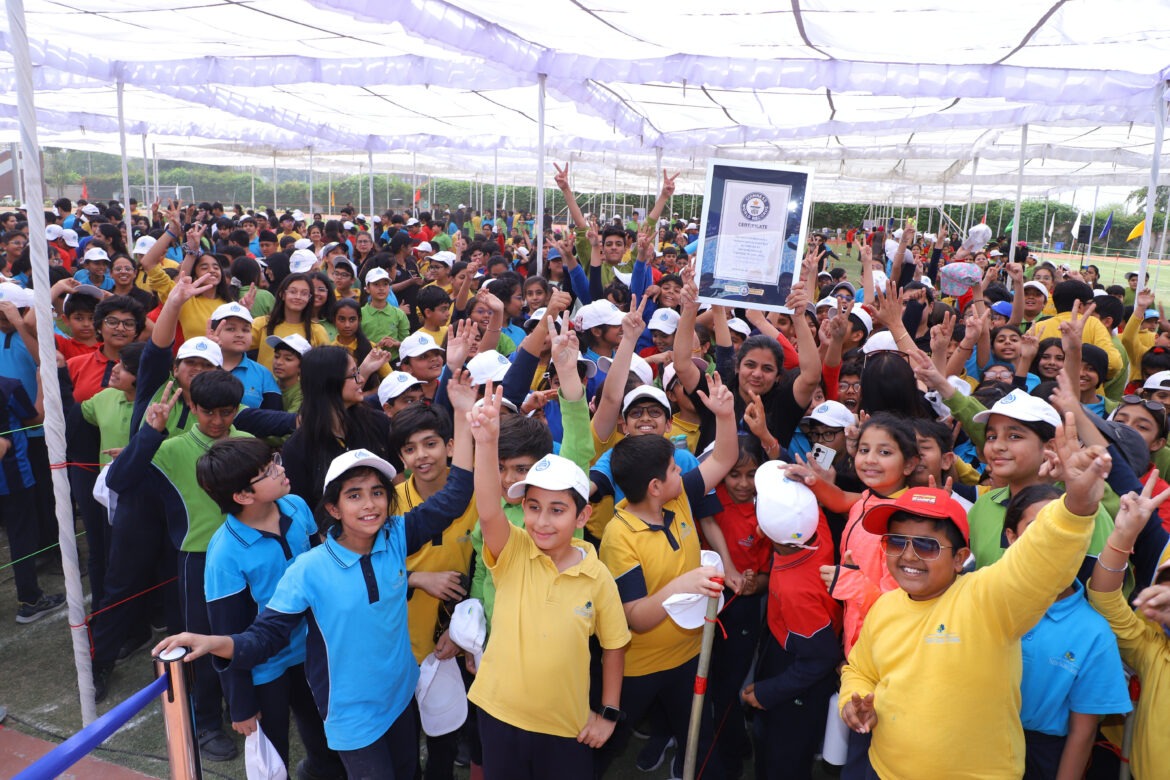
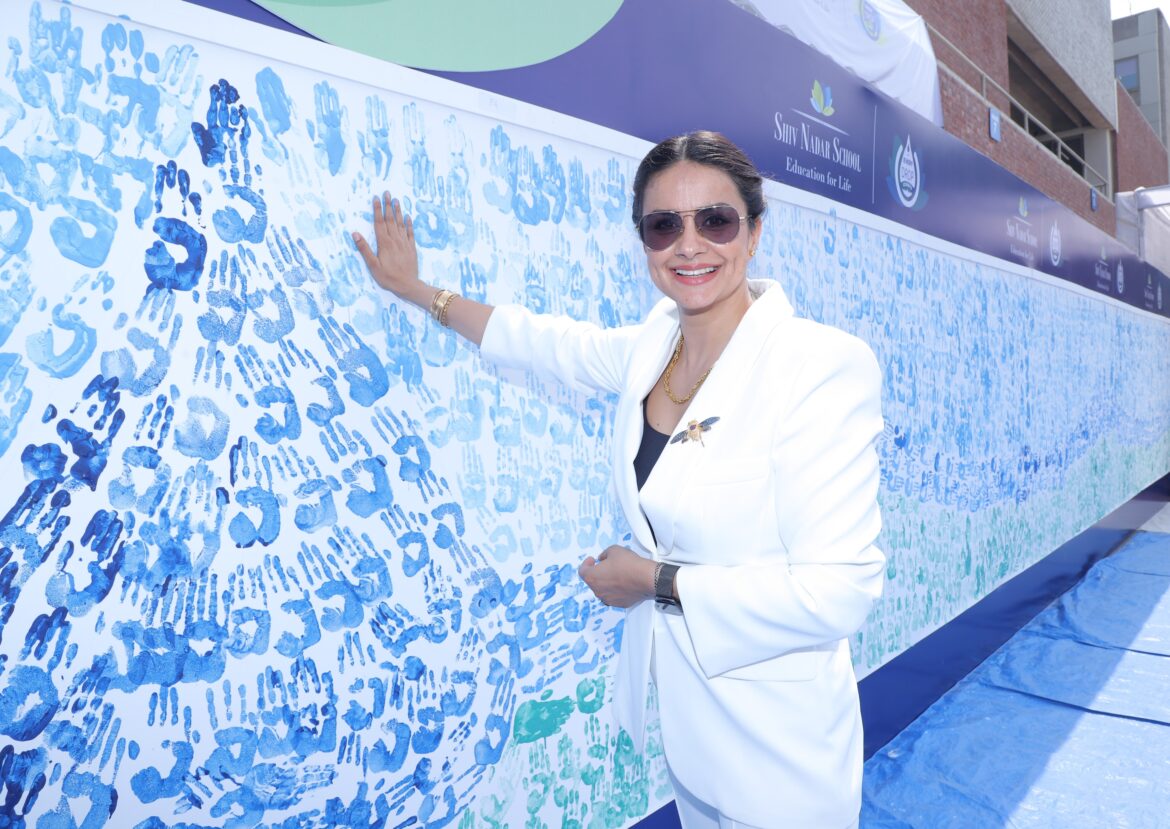
In a unique initiative that merges environmental awareness with a record-breaking feat, 2232 students and educators of Shiv Nadar School set the Guinness World Record title for the Most contributions to a handprint painting in one hour on March 14, 2024, at Shiv Nadar School Faridabad.

This world record serves as a powerful symbol of the school’s commitment to environmental stewardship and creating sensitisation on the conservation and preservation of nature in children from early years. The #EveryDropCounts pledge, taken by all participants, aligns with Shiv Nadar School’s core principle of Responsibility and UN Sustainable Development Goal 6: Ensure availability and sustainable management of Water and Sanitation for all. By creating this giant handprint painting, students visually represented the collective power of individual actions to drive home the message that water is an important resource and needs to be conserved.

The initiative saw the presence of Col. (Retd.) Gopal Karunakaran, CEO, Shiv Nadar School; Ms. Arti Dawar, Deputy CEO, Shiv Nadar School; Ms. Anju Wal, Director Principal, Shiv Nadar School, Faridabad; Ms. Anju Soni, Principal, Shiv Nadar School, Noida; Ms. Monica Sagar, Director Principal, Shiv Nadar School, Gurgaon; Ms. Vandana Marda, Director Brand and Communication, Shiv Nadar School; and Mr. Rishi Nath Official Adjudicator, Guinness World Records. It was flagged off by Ms. Gul Panag, who is known for her diverse roles as an actress, model, activist, and entrepreneur working on education, environmental issues, and disaster management – a champion of sustainable living.

Congratulating the students at Shiv Nadar School for breaking the Guinness World Record and achieving this incredible milestone, Ms. Gul Panag said, “It was a thrill to be part of this event, especially as it was for such a noble cause: water conservation. In my opinion, truly driving change in children happens at an early age. By planting the seed of environmental consciousness early on, we empower every child to become a changemaker. Shiv Nadar School is setting a phenomenal benchmark in this regard. The students will undoubtedly take these valuable lessons home with them. Now, the responsibility falls upon parents to uphold these principles within the community, fostering a movement for environmental responsibility. We can only imagine the positive impact if such values had been instilled in us during our own schooling; perhaps things would have been different.”

In the near future, half of the world’s population is projected to live in water-stressed areas. To ensure all people have access to water, we need to innovate new ways to help conserve and reuse this precious resource.  A better future for India and the world necessitates that we raise children to be sensitive to the environment and our natural resources. Sustainability has always remained one of the key areas of focus at Shiv Nadar School. I believe education serves not only as a tool for personal advancement, but also as a catalyst for societal change. Within every student’s pledge that we took today lies an acknowledgement of the interconnectedness of existence. This pledge goes beyond mere commitment; it signifies an awakening of our shared responsibility as stewards of the Earth,” said, Col. (Retd.) Gopal Karunakaran, CEO, Shiv Nadar School.

While addressing the students, Arti Dawar, Deputy CEO, stated, “Today, we stand on the brink of an imminent water crisis. Water conservation is now an urgent need of the hour. As we participate in creating history through the ‘Every Drop Counts Pledge,’ we stand to inspire with a powerful call to action towards using water responsibly and saving countless lives. Each of us here is a change-maker, and we stand today, recognising our responsibility toward solving the challenges of a water crisis. Our pledge is just the beginning of our journey and movement towards water conservation.”

Breaking the Record for a Sustainable Future


The event was a vibrant celebration of environmental consciousness. Over 2,500 participants, including students, educators, and guests, came together to create a breathtaking handprint masterpiece. The official record attempt was closely monitored by the Guinness World Records adjudicator and followed strict rules and documentation procedures. Super-washable, child-safe paints in shades reminiscent of nature – blues and greens echoing water, ocean and sky were chosen, reflecting the colors of Shiv Nadar School.

The day concluded with a vote of thanks by Ms. Vandana Marda, Director of Brand and Communication at Shiv Nadar School, who stated that we are a community united by a deep sense of responsibility and collective love for our planet. She mentioned that the journey was an incredible reminder of what we can achieve when we come together, driven by purpose and passion. This feat could not have been achieved without the dedication, grit, and resolve of all.

Shiv Nadar School has been at the forefront of promoting sustainable practices, and its efforts have been recognised and lauded by many. The school has been committed to water conservation, which is evident through various initiatives, including the installation of advanced water purification systems and regular quality checks. Additionally, the school educates students on water conservation through workshops and innovative projects. The school minimises water wastage with measures like dual flushing systems and rainwater harvesting, contributing significantly to environmental sustainability.

2024-03-16

A Guide to Understanding the IB (DP & MYP) Curriculum

Introduction

Education systems worldwide are redefining conventional teaching strategies to better equip pupils for the complexity of the contemporary world, which is marked by globalisation and rapid technical developments. The International Baccalaureate (IB) leads this transformation in education with a program that encourages more than just academic success. It also supports critical thought, cultural understanding, and respect.

This guide is designed to give you a deep understanding of the IB curriculum, focusing particularly on the Middle Years Programme (MYP)) and the Diploma Programme (DP). There are many benefits of an IB education. We will look at the structure of MYP and DP. We will also look at how both programs are different and how the IB prepares students for them. Whether your role is that of an instructor, parent, or student, this blog will provide insightful analysis of how the IB promotes the growth of well-rounded, informed, and compassionate global citizens.

IB as a Curriculum and Its Global Acceptance

The International Baccalaureate Programme was first developed in Geneva, Switzerland, in 1968. This programme was primarily designed for the students who moved between countries with a uniform, high-quality education. IB has expanded greatly within the last 50 years. It is being provided at about 5,000 institutions across more than 150 countries. The great adoption of this program indicates that it satisfies the demands of a society that is becoming more and more linked by technology.

At the core of the IB's success is its global framework. The curriculum incorporates international points of view into its teaching and learning strategies, therefore transcending conventional limits of education. This method guarantees that pupils are not only learning but also growing in awareness of many civilisations and world problems.

The IB curriculum is well recognised and credited by colleges worldwide. Many colleges of higher education appreciate the IB diploma's depth and breadth of study as well as the critical thinking and research skills students acquire. Sometimes, institutions honour the demanding aspect of the curriculum by offering advanced placement or credits to IB graduates.

Moreover, the IB's focus on developing qualities like critical thinking, open-mindedness, and moral behaviour fits the skills needed in today's workforce. Companies understand that IB graduates are typically ready for the rigours of the contemporary workplace and capable of working together across disciplines and cultures.

Advantages of an IB Education

Selecting an IB education has several advantages outside of just intellectual development. Here are several main benefits:

  • Holistic Development: The IB curriculum is meant to grow an individual holistically. It fosters ethical, emotional, and physical development by juggling extracurricular activities with classroom learning.
  • International-mindedness: The IB invites students to examine problems from many angles, promoting empathy and understanding. This international-mindedness develops :global citizens who are able to negotiate in many cultural settings.
  • Strong Academic Foundation: The DP curriculum: calls for students to research disciplines spanning six areas, including languages, social sciences, experimental sciences, mathematics, and the arts. This guarantees a complete education and the capacity to make links between many fields.
  • Critical Thinking Skills: Through components such as Theory of Knowledge and the Extended Essay, students improve their capacity for critical information analysis, argument development, and introspection.
  • Research and Writing Proficiency: In higher education, the research techniques and academic writing abilities developed by the Extended Essay and other tests are extremely valuable.
  • Language Acquisition: Learning a second language improves cognitive skills and cultural understanding, therefore preparing pupils for a multilingual global society.
  • Community Engagement: The DP's CAS (Creativity, Activity, Service) component inspires students to interact with their local communities, therefore fostering leadership qualities and social responsibility.
  • Adaptability and Resilience: The demanding character of the IB courses teaches pupils organisation, time management, and endurance.
  • Global Education Recognition: Recognised as an international certification, the IB diploma helps students who may choose to study overseas by providing flexibility. It also helps them in university admissions.

Framework

The IB curriculum is designed to provide learning continuity across three programs:

  • Primary Years Program (PYP) for pupils ranging in age from 3 to 12.
  • Middle Years Program (MYP), which is for 11 to 16-year-olds.
  • Program for Diploma Awards (DP): For 16 to 19 year olds.

The guide will concentrate on the two important phases of secondary school: the MYP and the DP curricula.

Middle Years Programme (MYP)

The MYP curriculum is a rigorous structure that inspires students to establish practical connections between their studies and their surroundings. It encourages students to connect the real world with traditional courses and prioritises intellectual challenges.

Key features of the MYP include:

  • Subject Groups: The MYP consists of eight subject areas: Language Acquisition, Language and Literature, Individuals and Societies, Sciences, Mathematics, Arts, Physical and Health Education, and Design.
  • Global Contexts: These structure learning in significant ways and provide common points of entry for enquiries about what it means to be globally focused.
  • Approaches to Learning (ATL): These are skills including communication, social, self-management, research, and thinking that allow students to "learn how to learn."
  • Service as Action: Students inspire awareness and responsibility by helping others in society.
  • Personal Project: In their final year of the MYP, students work on a significant project that showcases their ability for independent research and demonstrates their acquired skills.

Diploma Programme (DP)

The DP curriculum is a two-year comprehensive and balanced course finishing in final examinations. It aims to provide students with a great depth of knowledge. Notable components include:

Six Subject Groups: Students choose courses from six topic categories to guarantee a range of knowledge. Studies in Language and Literature, Language Acquisition, Individuals and Societies, Sciences, Mathematics, and the Arts include these categories.

  • Three Core Elements:
    • Theory of Knowledge (TOK): An interdisciplinary course exploring the nature of knowledge across disciplines.
    • Extended Essay (EE): An independent, self-directed piece of research culminating in a 4,000-word paper.
    • Creativity, Activity, Service (CAS): It helps the students to engage in artistic pursuits, community service, and sports.
  • Assessment: The DP uses a variety of assessment techniques to measure student achievement against well-defined criteria. These include internal assessments (coursework) and external assessments (exams).

The DP curriculum is designed to be academically challenging and prepare students for university-level education. The combination of subject depth and the development of critical thinking skills makes IB graduates highly sought after by universities.

Transition from MYP to DP

The transition from the MYP curriculum to the DP curriculum represents a turning point in a student's academic career. The MYP lays the basis by developing basic skills and attitudes the DP polishes even further.

Preparation through MYP:

  • Skill Development: The MYP's emphasis on the Approaches to Learning gives students self-management, communication, and research tools.
  • Conceptual Understanding: Students grow to grasp important ideas that the DP revisits and expands upon.
  • Personal Project Experience: Completing the MYP Personal Project, like the Extended Essay in the DP, gives students practice in independent research.
  • Interdisciplinary Learning: The MYP's multidisciplinary courses equip students for the integrated character of the Theory of Knowledge course.

Challenges in Transition:

  • Increased Academic Rigour: With more homework and tests, the DP expects a better degree of critical thinking and analysis.
  • Time Management: Managing the demands of six studies plus the fundamental elements calls for good time management.

Support Strategies:

  • Orientation Programmes: Orientation programs offered by schools assist students in grasping DP expectations.
  • Mentorship: Giving pupils mentors or advisers will enable them to negotiate the growing pressures.
  • Skill Workshops: Providing courses on study techniques, essay writing, and research methods helps to smooth the change.

Understanding the connection between the MYP and DP will help students to use their past knowledge and face the DP with confidence.

Real World Application

The International Baccalaureate Program stands out for stressing the need to use knowledge in practical contexts. The IB understands that students should be ready to handle world issues and that education ought to go beyond the classroom.

Global Contexts and Issues:

  • Environmental Sustainability: Subjects include talks on environmental sustainability, therefore motivating pupils to think about how their actions could affect the surroundings.
  • Cultural Understanding: Through language studies and humanities, pupils investigate several civilisations, therefore developing respect and empathy.
  • Ethical Considerations: Classes such as TOK and CAS inspire students to examine ethical questions, therefore strengthening their moral framework for guiding their decisions.

Community Engagement:

  • Service Learning: Service learning calls on students to participate in community service, using their talents to help others—both the MYP and the DP.
  • CAS Projects: Students work on CAS Projects, which integrate creativity, action, and service. Examples include planning environmental campaigns or community events.

Getting ready for world careers:

  • Interdisciplinary Approach: Integration of knowledge across disciplines helps students to be ready for professions demanding creative problem-solving.
  • Language Skills: Mastery of other languages creates prospects in non-governmental organisations, diplomacy, and international business.
  • Research Skills: Emphasising independent research helps pupils be ready for occupations that require analytical and inquisitive skills.

Technological Literacy:

  • Integration of Technology: The IB promotes the use of technology as a tool for learning and communication, therefore arming pupils for a digital world.
  • Digital Citizenship: Students study digital citizenship—that is, responsible technology usage and how digital media affects society.

Case Studies and Hands-on Experience:

  • Scientific Experiments: Practical experiments help students grasp scientific ideas and approaches.
  • Business Simulations: In courses like business management and economics, students participate in simulations reflecting actual market dynamics.

Worldwide Problems and Solutions:

  • Extended Essay Subjects: Many times, students choose subjects that touch on world affairs, therefore fueling scholarly debates and possible answers.
  • TOK Debates: Through careful examination of knowledge claims, students develop to negotiate difficult problems with nuanced awareness.

By means of these experiences, the IB curriculum guarantees not only knowledge but also the ability of applying learning to contribute significantly to society.

Conclusion

All things considered, the International Baccalaureate presents a transforming learning environment ready for the challenges of contemporary society. By stressing a global framework, encouraging the growth of global citizens, and including practical applications in its courses, the IB produces students who are informed and ready for a dynamic world.

The path across the MYP curriculum and DP curriculum gives students the tools and attitudes they need to succeed in future professions and further education. The IB's all-encompassing approach guarantees that graduates have not just high intellectual ability but also possess the critical thinking skills, cultural awareness, and ethical roots required to negotiate and help to shape a linked global society.

Selecting the IB is an investment in global education that opens doors to endless possibilities. It motivates pupils to make a difference in the world and helps them to realise their true potential.

2024-10-16

Evolving to attain Education for Life

As we reach the final destination of our Glimpses 2021 journey, it’s time to look at how we Evolved, to proceed from good to great. Challenges often prove to be the most effective teachers, as they force us to push our limits, explore the unknown and reach higher summits. Our faculty members were faced with the daunting task of providing excellent learning in a virtual environment, getting students back to school safely, supporting students and peers who have lost family members due to the pandemic, and continuing their learning. 

Celebrating Perseverance

Every goal is achieved twice; once in the mind and then in the real world. Our educators planned, prepared, and performed beyond their limits and once again proved their mettle. True VUCA warriors, they transformed Volatility to Vision, Uncertainty to Understanding, Complexity to Clarity and Care, and Ambiguity to Agility. Cheers to Peers, our annual event for honouring our educators, was celebrated with great gusto, though virtually. Here’s the video we released during Cheers to Peers, to express our gratitude. 

Channelizing Student Potential

The future of our students is our utmost priority. Hence, even during the years which challenged the norms, we continued guiding students in the best possible way. Students received counselling from accomplished Career Guidance Cell members to make their applications to leading national and international universities in a way that reflects their potential. The new methods of college interactions and selections had to be understood, and students needed to prepare for a virtual start to their higher education journey.

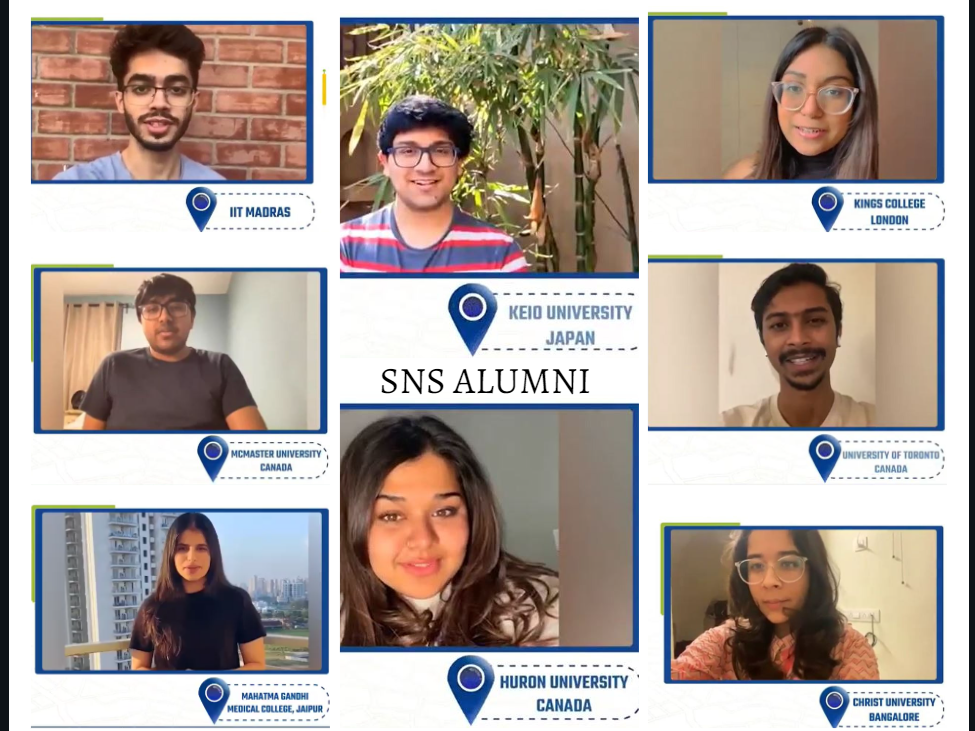
The CGC leads and counsellors walked the extra mile to ensure that students don’t miss any opportunities. Over the past year, students secured admission to reputed colleges across the globe. Some colleges where our alumni study are Huron University, McMaster University and University of Toronto in Canada, Keio University Japan, Kings College London, and IIT Madras and Christ University in India. A shout-out to our dedicated counsellors who connected with students, families, and college authorities seamlessly during the pandemic and facilitated the admissions. 


a


Standing by our Community

Tough times that test us also reveal our well-wishers. When our students, parents, and staff members faced adversities, we took every possible step to support them. While some suffered financial challenges, others lost loved ones and went through grievous times. Our close-knit community came together to contribute funds for various causes. Teachers pooled funds to distribute rations and medicines to the support staff. 

The school started a Fundraiser campaign to extend help to the students who lost a parent to the pandemic. The core team coordinated with the Parents Partnership Group and tied up with a non-profit Trust to maintain transparency and accuracy in all transactions. The leadership, teachers, and parents all contributed to a Relief Fund, creating a corpus of INR 39,00,000. The team identified ten beneficiaries. Ms. Shashi Banerjee, Director of Education, and Ms. Pooja Malhotra, Head, Parent Partnership, met the families and handed them the cheques. 


a

It was indeed a year of many trials and triumphs. Despite several disruptions, the collective efforts of teachers, parents, and students ensured our steady progress. Whether in Arts, Literature, Science, or Sports, our students continue to win laurels. Even as we hope for a more stable year ahead, we are empowered with knowledge, values, and mindfulness, and confident that we will ace the exams that life brings our way.


2022-04-05

OUR LEARNING JOURNEY - 2021

As we look back at how we fared over the past year, we start by analysing the paradigm shifts in the teaching-learning ecosystem. In this article, we recount how our faculty and students made the most of the digital resources for breaking the barriers in every domain of learning. 

The platform of digital teaching-learning was well established in 2021. Our teachers explored new interactive tools and used them to improve the virtual learning experience of students. Participation in the class discussions through Circle Time and Breakout Rooms ensured seamless learning.

The milestone achievements during the past year made us proud. The founding batch of IB-DP completed the program with all the students receiving the IB Diploma. Despite the challenges of limited interaction with teachers, our scholars performed exceedingly well in the final assessment.

a


a

Students also participated in several national and international competitions, proving their academic mettle on global platforms. The GSL Global Goals Competition was one such event that offered students scope to understand and appreciate the Sustainable Development Goals, as they competed with participants from 76 countries. Five teams from Shiv Nadar School offered solutions for global issues and two of them received Commendation Awards. 


Literary Quests

Students delved deep into the world of literature with multiple engagements. The first in the series was Literula Week, by Shiv Nadar School Gurgaon. The most striking aspect of this event was that it featured six student authors, who shared their published works with peers and teachers. 


a

Shiv Nadar School Faridabad too had its fair share of linguistic and poetic quests, with Literary Week for different cohorts. Students skimmed through myriad forms of literature like poetry, fairy tales, Twitter tales, cartoon strips, theatre, public speaking, poster making, and book cover designing. Guided by facilitators and external experts, they enjoyed the experience and showcased their work.


a

Mastering Mathematics

Shiv Nadar School NOIDA organised a 3-day National Level Online Mathematics Symposium, which proved to be equally enriching for teachers and students. Research Paper presentations, Panel Discussions on NEP, and Content Creation workshops focused on the changing trends in the teaching-learning environment. Students from several schools participated in the quiz held on the culmination day.

Coveted Conversations

Several interactions with distinguished persons from different domains also took place throughout the past year on the virtual platform. The illustrious guests including Padma Bhushan Meghnad Desai, Padma Bhushan Devaki Jain, and Padma Shri Air Marshal Padma Bandopadhyay, were hosted by our CEO Col. Gopal Karunakaran. Students also got a chance to interact with Dr. Gagandeep Kang, veteran virologist, as well as renowned authors Christopher C. Doyle, Venita Coelho, Bulbul Sharma, and Feisal Alkazi. 

a


NUCLEUS

Nucleus Society, a cross-campus STEAM initiative, is a collaborative effort of all branches of Shiv Nadar School, Shiv Nadar Foundation, and Shiv Nadar University. The society launched its magazine and website in January 2021. The rest of the year saw several projects in the form of workshops, peer learning, and webinars. 

SOUL Fest

As they neared the end of the academic year, students of middle and senior years took up Personal Projects to encapsulate their learnings and showcase original ideas. The culmination event for exhibiting the projects was aptly named SOUL Fest, signifying the Spirit of Unlimited Learning. Creativity flowed uninterrupted as students presented their research projects. Social causes, mental health, pandemic, space science, architecture, music, animal rights, carbon emissions, and more such themes were explored by students. 

a

The projects left the students and faculty richer, providing the perfect beacon for walking ahead on our path for lifelong learning. We strongly believe that applied knowledge is power.  Putting the learnings to use, significant innovations were witnessed throughout the year, which we will recapitulate in our Innovate post.


Apart from academics, students Explored their talents in domains as wide as sports, philanthropy, science, theatre, art, music, and dance. Our next post will recall the occasions we celebrated and the accolades our students won.

2022-03-22

A Peek into the Past Year’s Journey

If 2020 led us into spaces that were unknown and challenging, 2021 presented situations that tested our mettle to the greatest extent. It was a year of hope and despair. Despite heartbreaking situations, we emerged stronger, showing greater resilience.

The toughest challenges also proved to be our greatest teachers. All through 2021, we learnt new lessons, as we oscillated between digital and hybrid classrooms. As we seek to get back to a familiar, pandemic-free world in 2022, it’s apt to have a look at how we fared over the past year.

In this four-part series of articles, we will present stories of triumphs, trials, and learnings from the past academic year. We invite you to join us on this enriching journey.


LEARN

The LEARN segment will focus on how our faculty and students reached newer milestones over the past year as lifelong learners. As the school completes a decade in the pursuit of academic excellence, the students undertook several initiatives to celebrate the Decennial year. Literary fests and interaction with authors opened new horizons of exploring global literature. Students delved into personal projects, portraying multidisciplinary learning in the best way.

EXPLORE

Be it sports, visual arts, performing arts, or science, our students continued to move beyond the set benchmarks. They excelled in every sphere despite several challenges, making us proud. Several co-curricular clubs were formed by students, to continue their multifaceted endeavours in the virtual world. In our EXPLORE section, we will encapsulate their achievements across domains.

INNOVATE

Technological advancement took a vast leap of faith during the past academic year. The STEAM event, Educational Boot Camp, was conducted virtually with an international engagement with ITER France. The Capstone projects by students also scaled new heights. The INNOVATE section will look at how we touched new horizons in the digital world with flair.

EVOLVE

Finally, we will share the insights in the EVOLVE section about how we grew from all the experiences over the past year. We will also look at how our extended family stuck together and made commendable contributions to the community.

Follow us as we go on a roller coaster ride through a true VUCA year.   

2022-03-08

COVID fundraisers by SNS create a social impact

The past two years have been like a hurricane of challenges. The pandemic, an unseen and unknown enemy, created health hazards and economic predicaments for a large section of the population. Due to complete lockdown, thousands of daily wage workers lost livelihood. They were looking at a future with resources to support their family. With most organizations closing physical workspaces, contractual staff was in an abyss.

To support such sections, the community of teachers and students at Shiv Nadar School initiated several campaigns through online and offline platforms. At the Gurgaon campus, myriad stakeholders came together to gather funds and benefit maximum people. The staff made voluntary contributions for providing food and medicines to the support staff. Approximately 140 kits containing rations and medicines were distributed to the support staff every month.

a

The IBDP cohort also undertook a number of online and offline crowdfunding campaigns in multiple phases to raise a total amount of over INR 8,50,000. The funds went towards helping migrant labours, farmers, daily wage workers, mid-day meals at schools, and contributing to the Give India foundation. Students organised Bake-sale initiatives, Online Concerts, and Food Aid projects in collaboration with an NGO.

Going beyond the necessities, the team addressed the issue of disruption in the education of students who could not access virtual learning. The student council and parents jointly launched the mission ‘Reach one, Teach one’ to provide learning tools to the children of the support staff. The campaign witnessed the distribution of 45 brand-new laptops to the support staff.

a

The second wave of COVID brought a tsunami of loss, pain, and grief for innumerable people. The lack of medical facilities was disclosed as families of patients struggled to gain access to hospital beds, medicine, and oxygen. The situation called for immediate action in the right direction. The school leadership formed an Emergency Response Team to address the need for concerted efforts for helping the community of parents, students, and teachers. It spurred action that reached affected families at the shortest notice. In a bid to save lives, the ERT ensured that oxygen, hospital beds, and medicines were promptly available to all the patients.

However, despite all efforts, the merciless COVID took away some members of our larger community. Some students lost one or, in a worse situation, both parents. The school also lost some of its valued teachers. Though the personal loss was irreplaceable, the organization tried to bring some relief by providing financial support to the affected families. Reflecting responsible citizenship and empathy, the leaders, faculty, and parents at Shiv Nadar School took steps to ease the stress faced by the grieving families.

At the NOIDA campus, a core group of six members was formed to work closely with the Parent Partnership Office to collect funds. The team met all stakeholders to gauge the extent of the impact and identify the people who would receive the funds. Funds flowed in from the parent community and people outside it. The core group partnered with the Prithviraj Charitable Trust and made sure that the interests of the beneficiaries are protected.

The campaign successfully raised a total of INR 19,20, 311 from 168 contributors, and an equal amount was added to the fund by the Trustee of Shiv Nadar School. An additional contribution of INR 6322/- was made towards the fund by each core member, taking the total amount collected to INR 39,00,000. The beneficiaries identified by the Core team received this amount equally. Ms. Shashi Banerjee, Director of Education, and Ms. Pooja Malhotra, Head- Parent Partnership office, visited the families to hand over the cheques. It was an overwhelming experience for the Core Team and the beneficiaries.


Mother Teresa said, “It’s only a drop in the ocean, but the ocean wouldn’t be the same without that drop”. The small efforts by students, teachers, and parents collectively made a big difference to the beneficiaries. These steps reinstate our Core Value that aims at making every student an ethical and purposeful citizen of society.

2022-03-04

What are the academic options to pursue after IGCSE?

When you are standing on the threshold of senior school, you have to be very sure about the avenues that you can pursue after Grade X. The IGCSE provides a springboard to a bright future, and there are many routes that students can follow to reach there. The International General Certificate of Secondary Education is an international program with an emphasis on critical thinking and inquiry-based learning. It equips students to perform well at the senior school and college levels. Here are some of the most popular options that students in India pursue after the IGCSE exams.


A and AS level 


The Cambridge International Education curriculum offers AS and A levels after the IGCSE certification. The Advanced or A-level is a two-year program, segregated into two parts. The first stage is AS or Advanced Subsidiary and covers half the syllabus that is defined for the A-level. The AS level certification is a qualification on its own and can be completed in one year. 

The second part of the A level is called the A2 level. This takes the student to a higher level of specialization. Students have the flexibility to opt only for AS level, A level, or both in a phased manner. If students take up the AS levels only, they can appear for the exams at the end of Grade XI and complete the AS qualification. Students usually need to take four subjects for the AS levels. 

For A levels, assessments are done at the end of Grade XII. If a student wants, he can go for the AS level exams in XI and then opt for the A2 level course to attain the A level certification. The scores for the AS level exams are carried forward to the A level as per the rules of Cambridge International Education. 

The A levels are highly specialized and students have to take up only three subjects for in-depth study. The assessments for the A levels are based on independent research by students and gauge their capacity to solve real problems, with due application of knowledge gained in the subjects they study. The pattern of assessment combines internal assessment and written examination. 


INTERNATIONAL BACCALAUREATE


Another extremely popular and rewarding pathway after the IGCSE is the IB Diploma Program. It is an international curriculum that is accepted across the world and matches the conceptual learning techniques of Cambridge pedagogy to a large extent. Being student-centric and research-based, IB-DP helps students apply their skills in the best possible way for independent learning development. 

For IB-DP, students need to take up 6 subjects, which translates to a wider scope for students for their college qualifications, as compared to the A levels, which cover 3 subjects. Within the IB-DP framework, three subjects are pursued as Core subjects that are focused on career choices, and the rest three are taken up at standard level. Most schools specify the grades that students need to attain for availing admission to the IB-DP program after IGCSE.  

Another advantage of opting for the IB-DP is its structure, which includes a long-form essay, called the Theory of Knowledge. The community service aspect of IB-DP is also a scoring point when applying to international universities. IGCSE prepares a student well for the IB-DP since the rigorous study pattern that goes beyond the classroom and stretches the boundaries of students is a core value for both the boards. 


CBSE or ISCE Board


Students can always opt to move back to the Indian boards of education. ICSE and CBSE are the national-level boards that offer standardized education across the country. There are bound to be some differences between the IGCSE and Indian boards.

The pattern of study as far as subjects are concerned is one aspect. Since in CBSE or ICSE students have to choose from the specified stream, there is a limit on the choice that they can exercise. Moreover, the pedagogy also focuses on theory rather than practical knowledge. The NCERT curriculum is followed in most schools and students can refer to the books that are covered by this syllabus. The assessment patterns also support the theory-based study approach. 

With the New Education Policy enabling a multidisciplinary curriculum, the options available with the CBSE board are expected to broaden, thus benefiting students. The national boards are also compatible with the patterns of entrance examinations for various Indian universities. Opting for the CBSE or ISCE will prove to be a wise decision if students are focused on preparing for certain competitive examinations, and are not able to devote time for extensive study.  


The pathway that one follows after completing IGCSE in Grade X depends on several factors like the fee structure of different programs, the location of good schools offering the chosen program, as well as the future aspirations of students. The performance of students in the Grade X exams will also have an impact on the program that they take up. Those who have set their eye on pursuing further studies from an international college will benefit by opting for either A levels or IB-DP. Keeping a focused approach and knowing how to learn consistently will lead students to success in any path that they choose to pursue after the IGCSE program. 


2022-02-23

What makes IGCSE different from other academic programs?

The advent of the international curriculum in Indian schools more than a decade ago led to new avenues and a different set of decision-making challenges for students and parents. Now, it is not a matter of choosing the most suitable stream and subjects, but the curriculum that seems most befitting. 


Globalization, over the past few years, has boosted the need for communication skills and awareness of global cultures. International programs that offer subjects like Global Perspectives have thus gained the spotlight. 


The IGCSE program has a strong presence in India, being followed by over 500 schools. Let us understand the factors that make it different from the conventional boards of education.  


The difference in approach and curriculum


The Cambridge International website defines the curriculum followed for IGCSE as “flexible, challenging and inspiring, culturally sensitive yet international in approach.”


The curriculum is truly international in the sense that it gives enough scope for adaptation as per the particular needs of a country, and it is accepted by all leading universities across the world. The subject Global Perspective gives a unique understanding to IGCSE students and they learn to appreciate the cultural and ideological differences. Also, the curriculum follows a ‘spiral’ model and encourages students to develop their existing knowledge. 


The national boards like CBSE and ICSE have a fixed curriculum with well-defined textbooks. Though the New Education Policy seeks to bring some changes in the curriculum by introducing a multidisciplinary approach. With the IGCSE, students are required to refer to resources apart from their textbooks and drive their learning. Schools can choose different sets of books to teach the broader concepts. IGCSE follows a highly inquiry-based and learner-centred approach, which develops critical thinking and research skills. 


Cambridge Learner Attributes

Building a strong character is the most significant purpose that education serves. The Learner Attributes developed by the IGCSE program go a long way in shaping the holistic personality of students. Here are the five distinct attributes:


  • CONFIDENT

Students are confident of their knowledge and possess the risk-taking ability

  • RESPONSIBLE

They learn to be responsible for their actions. They are also RESPONSIVE and RESPECTFUL towards others

  • REFLECTIVE

IGCSE learners are reflective and develop analytical thinking with problem solving skills

  • INNOVATIVE

They learn to innovate and become adaptive, ready to face challenges

  • ENGAGED

Students are mindful and engaged with their academic journey, as well as socially


Through these attributes, students learn the three most essential functions for university education: Analyse, Synthesize and Communicate.


Difference in Assessments


The IGCSE learners are not supposed to merely memorize information and reproduce it in the examinations. They have to understand it in-depth to apply the information in real-life situations. Hence, practical applicability and creative use of knowledge is the focus for IGCSE, instead of theoretical learning. Assessment is done based on such critical thinking of students. 

Moreover, the criteria for assessment can be modified by the Cambridge board, depending on the difficulty level of the examination. This is not applicable in the case of CBSE or ICSE. 


Acceptability in Indian institutes and competitive exams

When it comes acceptability of IGCSE by the Indian Universities and its suitability for the competitive exams, it is at par with any Indian board of education. All Indian colleges accept the Cambridge qualifications. Moreover, as it equips students with problem-solving skills, IGCSE education builds a strong foundation for various professional examinations. 


Apart from these differences, the IGCSE offers an immense range of subjects to choose from, not limiting themselves to a particular stream like science or humanities. The rise in the number of institutions that offer the IGCSE for students of Grades IX and X provides evidence about its increasing popularity and acceptability. 


2022-02-14

Subscribe to Blog