
Delving Deeper Into The Ramayana

The month of October presents us with numerous opportunities to get back in touch with the wondrous mythological & literary heritage of ours. These roots, from which we collectively sprout, are conveniently forgotten in the mad race of life. We, at Shiv Nadar School, realise this, and hence emphasise on the fact that we all should find some time to reflect on these great stories from our past, also because they contain time-defying messages for our present and future.

Of the two great epics written in the land now known as India, Ramayana is understood as the book of ideals. The month of October, this year, celebrates not one, not two, but three festivals which invoke the characters and incidents from this famous composition, written and rewritten at numerous times during the passage of time. The versions of Ramayana, in fact, had grown so large in number, that people exclaimed that the entire earth will drown under their collective weight someday!

We thought, rather than telling you about the proverbial war of good versus evil, let us take you through some of the lesser known aspects of the epic.

  1. Ravana was a great scholar!
    Yes, the same Ravana, reviled as a demon, was a learned son of a Brahman named Vishravas, and had knowledge of all the Vedas. Ravana believed greatly in the power of astrology and had also authored an astrological treatise called Ravanasamhita. This great worshipper of Shiva is worshipped himself as a deity in a temple at Kanpur. Of Ravana’s ten heads, nine symbolised evil, but one symbolised faith and wisdom – it is because of this one head that Lord Rama felt sad upon killing him. Rama instructed Lakshmana to bow before the fallen Asura King, and ask him for the gift of knowledge. This tells us volumes about how we all can gain wisdom by moving away from shallow perceptions of good and evil.
  2. Rama – Not the ultimate incarnation of Vishnu
    Rama is known by all of us as the ideal son, ideal brother, ideal husband, ideal father, and ideal King. He has been worshipped by generations of unquestioning devotees. He is hailed as Maryada-Purushottam – the upholder of all rules and conduct of the society. However, it is not him, but Krishna, who is hailed as the Purnavtaar – the complete incarnation of Vishnu. Krishna is known as Leela-Purushottam. He is the Supreme Being Himself, He Who revealed the Bhagwat-Geeta. Rama followed rules, but Krishna made rules follow Him. What is significant to note here is that both these incarnations lived a life full of human experiences – they made mistake and suffered in consequence of those mistakes.

     
  3. Sita’s Kitchen
    Upon being abducted and taken to Lanka, Sita lead a solitary life; but because of her warm and affectionate nature, and her sharp mind, she came to be adored by all Lanka-wasis. Sita had inherited exemplary cooking skills from her mother, and these were put to use during the war at Lanka. When rakshasa warriors came home tired, their wives and mothers doled out food to them made upon the advice of Sita. So delicious was this food that the warriors kept asking for more and forgot all about the war! A well fed man is not violent by nature, and when Ravana heard of it, he ordered his warriors to be starved. Thus they came marching back to the battle-field, hungry to devour oncoming Vanara army. The lesson here? Eat well, live well.


  4. Rama had a sister
    Not many know about this, but the first born child of King Dasharatha was a girl named Shanta. She was born of the eldest Queen, Kaushalya. Dasharatha, not satisfied, went searching for a woman who could bear him a male heir, and ended up marrying Kaikeyi and Sumitra. None of them, however, could bear him a child, and hence a great Havana was conducted, the gifts of which were the four brothers – Rama, Bharata and the twins – Lakshama and Shatrughna. Shanta, meanwhile, married a tapasvi and was forgotten for a greater part of the text.


  5. Valmiki – Dacoit turned Rishi
    Rishi Valmiki is credited for having authored the earliest known version of Ramayana. We all know that Valmiki was previously a dacoit named Ratnakar, who was transformed upon his meeting with Narada, the Divine Sage. Most of us, however, do not know that Valmiki is called ‘Aadi-Kavi’, the first poet. It was he who invented the Shloka. The first shloka was uttered from his lips in a state of emotional turmoil as he saw a Krauncha bird crying over the death of his mate who was struck by a hunter’s arrow. The first ever Shloka, thus, was uttered as a curse to that insensitive hunter.


    There is a narrative of Ramayana which we all know, in which Rama, Sita and Lakshmana are banished to the woods, and they return 14 years later after defeating and killing Ravana. However, the text contains numerous stories, each with something unique to tell us about the human condition. Curiosity to explore and urge to inquire – ride on these two motivations the next time you read the Ramayana, and you will see the book reveal many hidden messages to you, applicable to the contemporary existence. Do also share with us some stories which you found interesting!

2014-10-12

I Can Call It My Own

‘Poetry is so unique. It is something I can call mine, and at the same time, it can belong to everyone’, shares Anavi Akhauri, a budding Spoken Word poet from Shiv Nadar School, Noida. In the week that has just gone by, the school celebrated poetry – along with its many facets, and its inherent character which evokes the most raw expression out of people. Stretching from 28th August to 31st August, this Poetry Week saw writing, teaching, reciting, reading – all in action at Shiv Nadar School, Noida. In every manner that poetry can be explored and relished, the students made sure it was a part of their plan.

‘Some time back, I had watched a video of Sarah and Phil Kaye. They are internationally renowned Spoken Word poets. I thought of doing something similar in school, and thankfully enough, we were able to pull together a great poetry week’, says Harsh Jain. He, in fact, was so inspired by the duet video he saw, that along with Aishwarya (surname?), he wrote a poem on adolescent sensitivities. These are topics and concerns topmost on the mind of our youngsters – poetry often becomes the aesthetic vehicle, perched on which, these can be shared and expressed in front of multitudes.

According to the book ‘What is Poetry?’ written by Michael Rosen, ‘Poetry belongs to all of us; everyone can read poems, make up poems, or share poems with others. Though we often talk about poetry being dense or difficult, poems are able to present complicated or challenging ideas in ways that we can carry around in our heads. They help us ask questions about the world, how we use words and who we are.’ That makes poetry sounds pretty cool, doesn’t it?

Let us take you through a brief journey of what happened during this week.

The Old and the New

Poems are a part of a continuously evolving tradition, which contains many great, classical poets, as well as some contemporary names which have just about begun emerging on the horizon. To create exposure, as well as a culture of appreciation, a board was put up in the school, wherein, two poets were featured each day – one old, one contemporary. Titled ‘Flair of the Feather’, this board actually afforded passers-by a moment of reflection or two, as they tried to read out the immortal verses written by legends like Oscar Wilde, John Keats, as well as the Instagram generation of Rupi Kaur, Christopher Pointdexter, etc.

Writing and Reciting

While a lot of us scribble little verses of glee and anguish at the back of our diaries and in quick access sections of our electronic devices, many of us don’t share it on a public forum. In a bid to encourage expressions and expressiveness among students, they were asked to submit their written work to the editorial board. Some poems from among these were then selected for publication, and a few others for a specific kind of recitation session, called ‘Spoken Word’.

The session saw 8-9 poems being performed by senior school students in front of an engaged audience, who spoke of issues close to their heart. ‘The spoken word session was amazing. My friends presented many different kinds of topics in their poems’, said Shifa Farooqi, a budding poetess. Upon being questioned about her poem, Anavi Akhauri said her poem ‘reflected her relationship with anxiety.’ The deeply felt emotions and experiences, all were verbalized beautifully through these raw verses composed by students.

Letting Creativity Flow On

While the Poetry Week was led mostly by senior students, they did not forget to include the junior students in this celebration of expression. As a part of the week, the student organizers conducted a workshop for fifth graders. They spoke about poetry, its many forms and figures of speech during the workshop. Not only this, each facilitator of the workshop is now mentoring a small ground of fifth graders. ‘We wanted to introduce this system of mentorship, in which the junior students can learn from their seniors. It is wonderful to see the exchange of thoughts and ideas between them’, shared Kirti Kaul, the teacher convenor for the Poetry Week.

Uninhibited expressions by students open gates of wonder, innovation and creativity for all listeners and readers, and poetry is a powerful vehicle for doing the same. The poems shared during the week stand as a testimony to the power held in the imagination of young voices.

2017-08-04

RESONANCE 2019 – OUR EXHUBERANT CHORAL ENSEMBLE TAKES CENTER STAGE!

The Western Music Choir Concert, Resonance 2019, was held on November 25. It was the jubilant culmination of the year-long Shiv Nadar School Gurgaon Choir Program.

The audience buzzed, itching for the concert to begin. Backstage, the atmosphere was slightly different - the choir students were sat in a group, tense yet cheery. All clad in red and black, they encouraged one another as they waited for the show to begin.

Outside, concert manager Reva Bharti takes the stage. “‘Music brings people together. No matter what language we speak, what community we belong to, the form of our politics or the expression of our love, music proves that we are all the same,’” she begins, quoting John Denver. The audience immediately quietens down.

The Western Music Choir at Shiv Nadar School, Gurgaon was conceptualized to bring together the best musical talent and facilitate them into creating a unified community of performers, irrespective of age, background or musical taste.

Making up the choir is 44 passionate students from Grade 5 to Grade 11. They come out in full force for the first performance of the afternoon with a spirited rendition of "I’m On My Way". "I don’t know where I’m going, but I know what to do!", they sing, with the sort of talent that completely defies their tender age.

We are then treated to performances by the students in smaller groups of fours and fives. Spanning genres and styles, they take the audience through ballads such as "Falling Slowly", classics like “Hey Jude” and inspirational pieces such as "I Hope You Dance", "A Million Dreams", "We Could Fly" and an original song composed by music mentor Ms Manta Sidhu, "Rise".

They prove that their musical skills know no barrier even when it comes to language, showcasing their expertise in the French classic “La Vie En Rose”, the Spanish “Mil Pasos” and the closing number, an African/Swahili piece “Ingoma” for which the choir comes out in full force once again.

The students on stage perfectly capture the spirit of the Western Music Choir Program. For them, it isn’t just about honing their skills in music alone. In their journey, they are encouraged to move far beyond their comfort zones and develop skills that, in the beginning, may seem out of their horizon - be it in terms of their vocal range, their capacity to learn vocal harmonies under a time crunch or keeping up with their rigorous practice schedule even at the end of the most exhausting school days. They are also encouraged to learn and perform songs in foreign languages not only to expand their knowledge in music, but also in a bid to enhance their ability to embrace other cultures.

As a part of the choir, students get familiar with a wide variety of musical styles with the intention of broadening their sensibilities as musicians. In addition, they also get the opportunity to explore their potential as solo performers, with parts assigned on the basis of their individual singing styles, vocal ranges and voice modulation skills. Above and beyond, the SNS Choir Program has always sought to create an environment that helps develop the spirit of team work, good will and Kindliness.

During the concert, we are treated to thirteen songs in total. One of the highlights of the evening is a moving rendition of "Sleepsong Lullaby" performed by the choir. The audience sits utterly enraptured throughout. Another high point is “Ingoma”, as the choir sings with an infectious energy and zeal - the passion in their performance evident for all to experience as the choir sways in unison, one with the rhythm.

Music mentor Ms Manta Sidhu is sat in the audience too, right at the front, on her knees almost throughout the concert. Her commitment and devotion is immediately obvious as she lovingly conducts the choir, encouraging the students where they may hesitate and cheering them on through their performances.

The evening concludes with a thank you address from Ms Sidhu, closing words from Ms Monica Sagar, Prinicipal, Shiv Nadar School Gurgaon and certificates distributed to all the choir members. Grade 9 vocalist and pianist Sparsh Jha was awarded Performer of the Year, to thundering applause and cheers from both the audience and his peers.

<Performance of the Year Pic> <Group Photo>

Reva once again takes the stage as she closes the evening with a befitting quote from American Author Henry van Dyke. “The woods would be very silent if no birds sang there, except for the ones that sang best.” Indeed, words to live by.

2019-12-04

Evolve

In the final part of our series, we reflect on a milestone year – a year that was designed to test our mettle, offering us challenges galore and through every challenge, the opportunity to grow and evolve.

Amidst the continuous chaos, most, if not all of us, realised afresh our ability to face and embrace even the most difficult situations. As we stepped out of ourselves in creating a healthy space for our students and for each other, paradoxically, our circumstances encouraged us to go further inwards in introspection. We learned to enjoy our own company, yet our bonds with the community were forged stronger than ever this past year, without physically meeting even once.

“Education for life” was redefined in a unique sense – we revelled in being able to discover ever new ways, means and tools, in the realisation that truly, we are all learners and there can never be a limit to knowledge and learning.
 

(We released this video celebrating educators everywhere - the real VUCA Warriors - transforming a Volatile, Uncertain, Complex, Ambiguous world into a new VUCA, characterised by Vision, Understanding, Clarity and Agility.)⁣


We experienced giving and receiving new depths of empathy for one another. And most importantly, through recognising our positions of privilege, our students, parents and staff took every opportunity to help others stay afloat.

The Shiv Nadar School Gurgaon Student Council spearheaded Reach One, Teach One, an initiative to secure brand new laptops for the children of the school’s support staff so that education could continue uninterrupted.

Reach One, Teach One by the Shiv Nadar School Gurgaon Student Council.

That’s What Classmates Do, a Shiv Nadar School Noida parent-led engagement ensured laptops for neighbourhood children. Community Kitchen was organised by Shiv Nadar School Noida to reach out to the communities around the school, serving around 500 meals every day.

Team Enkindle, a team of six from Shiv Nadar School Noida (in collaboration with Make-A-Wish Foundation) designed, executed and fundraised for a solution to address the menstrual hygiene crisis faced by low-income communities by distributing kits to over 1000 women and children.

Team Enkindle, from Shiv Nadar School Noida.

Beyond this, individual students and their families across all three of our campuses fundraised and arranged donation drives in their own communities.

As we look back and reflect on a year truly like no other, we find that it was through the critical relationships between School, Parent, Student, and the broader Community, that we have all been able to weather the chaos. Ever learning, innovating, exploring and evolving, our journey has now led us to the shores of 2021 – knowing not what life will bring, but strong in the knowledge of what we can bring to life.

2021-01-25

Explore

In the penultimate part of our series, we explore how the Shiv Nadar School community of teachers and students was able to take every opportunity the year offered to venture beyond the realms of the school.

Our students participated in competitions across different schools, categories and themes. Many took initiative by way of their own individual achievements. And in this milestone year, all of our educators truly did us proud, with many of them being awarded or given recognition for standout achievements. We recount a chosen few of the highlights.

Joie de Vivre, the inter-school cultural fest, saw winners from Shiv Nadar School Noida being able to push the most creative frontiers. Mahika Thampi taking the pole position for storytelling, Aarya Mahapatra at second place for Solo Dancing and Barish Raman and Mannat Khan snagging first and second positions respectively in the Stand-Up Comedy category.
 

Click on the following links to watch the students' performances:
BARISH RAMAN
MANNAT KHAN
MAHIKA THAMPI
AARYA MAHAPATRA
 

The National Design Championship 2020 saw Grade 8 Shiv Nadar School Gurgaon student Devasya Sharma win runner up on the national level for the game he designed “Underwater”. In the Regionals (across North India), Shiv Nadar School Gurgaon saw three winners in the categories of Industrial Design (Akshayae Tehlan, Grade 7), Game Design (Devasya Sharma, Grade 8) and Graphic Design (Hridank Mahajan, Grade 7). 

(Devasya Sharma, National Design Championship)

Shiv Nadar School Faridabad students shone in the Regionals as well, competing against around 500 schools in Delhi/NCR. Grade 6 students Sana Bose, Sahil Chhabra and Tejas Chitkara came first place in Movie Making, with Nalin Tanwer and Vihaan Garg coming second. Ishika Pannuu and Aryan Goenka came second place for graphc design and Akul Chitkara at second for app design.


Shiv Nadar School Gurgaon students Jeiya Khurana and Aditya Tanwar won The Youth Leader Competition organised by The Global Education and Leadership Foundation (tGELF) with their Grade 10 capstone project Fluid Force, which aims to conserve the monumental volume of water wasted through the RO filtration process.

(Jeiya Khurana and Aditya Tanwar  won The Global Education and Leadership Foundation with Fluid Force.)

The year also saw numerous student achievements through independent initiatives.

Shiv Nadar School Faridabad Grade 5 student Pranet Pahwa’s app XDOC+ was declared the winner of MIT’s App of the Month for December. Kshitij Goel of Grade 4 designed a low-cost portable ventilator device which won the Special Jury Innovation Award as well as the Audience Choice Award at the NXP India Young Innovators Challenge.

(Shiv Nadar School Faridabad's Pranet Pahwa and
Kshitij Goel.)

“Not A Test” a play directed by Deepmala Tiwari (former Shiv Nadar School theatre educator) featuring Shiv Nadar School Gurgaon students Ananya Bhagwat and Vyoma Lal, as well as educator Tanya Sharma, went live on Broadway. The play was livestreamed in November on the Broadway On Demand platform.

(Live on Broadway.)

Our educators this year were the real VUCA Warriors in the face of the tempestuous waters of 2020. We are proud to note the recognition they received through the year.

Shiv Nadar School Noida educator Tuhina Joshi won UNESCO & Big Impact Conslting Group’s Progressive Educators’ Platform(PEP) Teacher’s Award. Hima Arora won “Innovative Teacher of the Year 2020” in the International Education Awards. Arzoo Rikhy and Shipra Adnan Bhartiya were recognised as Fellow Habit Heroes from the Harappa Foudation. Sumit Mandhwani and Deepika Joshi won the Reliance Foundation Teacher Award. Shiv Nadar School Gurgaon CENTA TPO Winning educator Sukanya Banerjee was invited by CENTA to facilitate a webinar as a part of their Webinar Series for Teachers.

Through learning, innovating and exploring our way through a precarious year, in the next and final article, we cast a look at perhaps the most important part of our journey of all – through the highs and lows, and successes and challenges, how we were able to evolve.

2021-01-26

Innovate

While we found increasing success with online classes, the experience of school goes far beyond the realms of the classroom alone. And so, everything that our physical school stood for needed to find its own voice and space online. 2020 gave us the perfect opportunity to innovate.Our events were reimagined to suit the online space – be it our annual flagship experiences, or entirely new ones.

Funkaar Week celebrated the coming together of multiple perspectives and dimensions towards holistic, experiential learning. A different world of possibilities was introduced to the students this year, with activities including video exchanges and experiments, interactive storytelling sessions and virtual tours. Collaboration, exploration, discovery and reflection were integral parts of the week.

Anandam, the celebratory culmination of our year-long AHA! learnings also found itself in a shiny new online avatar. The performances were gripping across the board, and the visual arts basket had its time in the spotlight too owing to its innovative approach.

Our IB students’ had their CAS Cultural Day (called “Ressentir” this year at Shiv Nadar School Gurgaon) which was received with equal aplomb.


Without meeting physically even once, Kaafila, our student-led and student-organised festival celebrating the arts crossed international borders, reaching out to 500+ students and 20+ schools. Kaafila also featured a digital “Arts’ Haat” through which artists impacted due to the pandemic could sell their work online.

In order to mark the International Day of People with Disabilities in December, Ability Week celebrations were held across all three campuses. The week featured awareness-building activities for students, parents, teachers and staff as well as expert-led dialogue and fora.

We had the month-long Energy Bootcamp with participation from 2000+ students and featuring scientists and luminaries from all across the world. Taking advantage of the fact that it was fully digital, we also had virtual international guided nuclear reactor tours, virtual science experiments, a Youth Parliament and much more.  

For the first time this year, we introduced an integrated academic fest “Synkalo” – organised by Shiv Nadar School Noida, and featuring participation and collaboration across all three campuses, multiple competitive and non-competitive events were held in breaking walls between the scholastic and co-scholastic domains.

Inarguably, the event showcasing the most innovation and inventiveness of all was Colloquium 2020. Held with gusto and fully reimagined for the online space, Grade 10 students from Shiv Nadar School Faridabad, Noida and Gurgaon brought their best innovations to the table – this year’s winners were Team Postura – with a sleek, portable and cost-effective device to address bad posture issues.

Our runners up, Team SAFE, innovated a rotating, UV-lit, auto-sanitizing bench which aims to reduce the risk of infectious diseases. And the audience choice winner was Team Sewage Squad – their machine aims to entirely eradicate the menace of manual scavenging in India.

All the student teams were received with warmth, encouragement and awe, the only difference this year being that we went entirely digital. Our esteemed jury consisted of ...

Through learning and innovation, our community was able to stand resilient in the face of uncertainty. In our next article, we recount another crucial part of our process - exploration – as our learners and educators found their voice, venturing beyond the digital boundaries of school.

2021-01-27

How to Manage Real Behavioural Issues in Virtual Classes

The second year of virtual learning has brought new challenges. Prolonged absence of physical classrooms and connections has led to the rise of behavioural and psychological issues among students. Many of these translate into tangibles like attendance, attentiveness, class participation and discipline.

In a session that was a part of the Continuous Professional Development program at Shiv Nadar School, teachers and counsellors sought new ways to address the behavioural issues arising due to online learning. Sharing their experiences as well as insights, they framed valuable guidelines for making online classes enriching.

Behaviour Management is not about punishing unwanted actions or rewarding good behaviour. It is about having strategies in place to support children to behave in ways that help them to gain the most from their schooling. By constantly striving to understand students’ psyche, teachers can help them learn more effectively.

Certain strategies that a teacher can employ to ensure appropriate behaviour in virtual classrooms are:

  • State objectives clearly: With well-defined goals, our actions can be directed, and attaining success becomes easier. We need to set aims at the beginning of each class and reiterate them for measuring results.
  • Have shared expectations: Simply telling rules will not help. Children must be made a party to the agreement for setting a code of conduct, regarding academics as well as behaviour. They must also propose rules to be followed in class
  • Employ positive correction: Praising effort and not just result encourages students to participate. We must inspire them to explore and evolve, learning from mistakes. Such motivation is all the more important in the online teaching world.
  • Create a connection: Observing closely and Listening Actively are essential to ensure students share their thoughts freely in order for the facilitator to counsel or course correct.

Here are some real-life case studies that will help teachers to understand how to tackle behavioural issues in online classes:

Issue: A child who performs well in offline classes and is excited about learning hardly joins online classes and is averse to keeping her camera on.

Approach: After persistently communicating with the child directly, the teachers come to know that her mother is a strict disciplinarian and resorts to helicopter parenting during classes, often punishing the girl for minor mistakes. Hence, she developed a fear of attending the classes in presence of her mother. In such a case, parent’s counselling is done, preferably by the school counsellor, and the child is encouraged to attend classes independently.

Issue: To impress the teacher in virtual classes and respond quickly, a child uses google to search for answers.

Approach: The teacher does not rebuke the child. Instead, she tries to give chance to other students who are responding after investing more time in thinking about the answers. She aims to inspire the child to think on his own by appreciating other perspectives. The child must be made to realise that his genuine effort to learn in the class is important, even if he is not answering all the questions.

In the present scenario, teachers need to be prepared with not only lesson plans and assessment sheets, but also interactive modules, quizzes, and pallets for online participation. Providing a certain level of autonomy to students for choosing the medium of interaction can also work positively. Moreover, inviting feedback from students is essential. Teaching cannot be a one-way communication. 

Developing personal connect through customized communication, experimenting with different pedagogical approaches, and forging a mutual trust-based relationship with the parent to utilize their intervention when needed, go a long way with managing behaviours. A 360 degree evaluation approach is required to take ahead the journey of virtual learning.

In the words of celebrated educator Rita Pierson, “every child deserves a champion- an adult who will never give up on them, who understands the power of connection and insists that they become the best that they can possibly be”. Today, more than ever, teachers have the task of establishing an emotional connect, be amiable and evoke happiness in children.

2021-05-13

Understanding Literature with Art, Music, Customs and Drama

It is what you read when you don't have to that determines what you will be when you can't help it.

Oscar Wilde

Books prepare us for the challenges that life throws at us because when we read, we live many lives. Reading is thus, a life skill for students of all ages. Intending to nurture a love for books, Shiv Nadar School Faridabad organised the Literary Week for students of Primary Years. It was the first event that the students attended in the hybrid format, with many students present in classrooms. Being able to interact with educators added zeal to their experience.

We try to connect different subjects to make learning more meaningful for children. The Literary Week also saw literature merging with arts, music, and habitats. The end goal of such amalgamation is to cultivate the skills that form the pillars for 21st-century education - communication, critical thinking, creativity, collaboration, culture, and connectivity. The event was a journey into the world of literature, with several sessions with the faculty, external educators, and storytellers. Let's take you through the adventure that students enjoyed in the land of literature.

Putting Heart into Art

The Primary Years explored different art forms that bring stories to life through illustrations. Donning the role of an illustrator, the students prepared their storyboards for their favourite stories. For students of grades 1 and 2, this proved to be a highly engaging activity, giving them a chance to pour out their creativity on paper. They learned about masks in a very different form from those that have become a part of our attire. Exploring the use of masks in storytelling, they made their masks to signify different characters.

The poster-making activity was another attempt to boost artistic expression. Students created theme-based posters and wrote slogans. In yet another session, students wore the hat of a cartoonist and made comic strips. They let their imagination go unbridled for mingling artwork with intriguing dialogues between the comic characters. Apart from enhancing the motor skills of children, these exercises helped them to organise their thoughts.

Fantasy and Folklore

Now, who doesn’t enjoy a mysterious fairy tale? Children went on a journey to the fantastical land of fables and fairy tales with their educators. They also understood the origin of these formats and discussed the qualities that the characters in these stories imbibe.

The concept of ‘themes’ was explained to them, and they tried to identify the central idea around which their favourite story is based. While studying folk tales, students were introduced to the cultures, geographical conditions, traditions, and historical events that shape the folktales. 

A Sound Instruction

The theatre and music facilitators took students on a musical journey. They had a gala time creating soundtracks for some popular stories, adding their effects to the soundtracks, and expressing the twists in the tales through high and low notes. This session successfully combined literature with technical skills of sound mixing and scientific knowledge of audio levels.

We believe that literature carves students into impactful speakers, who can convey their ideas with emphasis. To put this theory to practice, the importance of voice modulation and the use of the right tones for speaking or narrating stories were explained in a highly engaging way by an expert storyteller. Narrating the same passages monotonously and then with expressions, she explained how voice modulation can add texture and meaning to a text. The students in class then tried reading using different tones and expressions. This also helped the children get rid of the fear of public speaking.

The Skill of Stories

Our budding authors were excited to learn about the art of writing a story. In a dedicated session, they learned about the process of story writing and elements of a story like a scene, event, problem, and resolution. They also explored the different ways to introduce a character.

The most engaging part of the session was extempore story weaving, where students got a few clues and created short stories from their imagination, touching the realms of magic, drama, and even aliens. With the hybrid model of learning, many students were able to participate in the activity from their classrooms.

Language no bar

Children must have a grasp of English as well as Hindi, the national language. So, Hindi literature was a vital part of the Literary week and included poetry and stories by renowned Hindi writers like Munshi Premchand and Mahadevi Verma.

Limericks, comic strips, poetry writing, and story plots were the ingredients that added a different flavour to the concoction of Literary Week. The creativity cauldron was overflowing with the imagination of the young ones, as they exercised their right to write without inhibitions. The motive of the literary week is to nurture the love for literature and ideas sprouting in the nimble minds. With students yearning for more stories, plays, and poetry, it would be fair to say that the event was successful in carving book lovers.

2021-12-16

Literula Week 2021 - Celebrating Authors, Young and Old

Whether it is an 18-year-old first time author, or a 55-year-old seasoned writer with several enthralling books up her sleeves, their advice for budding authors is the same, “don’t wait for inspirations, just keep writing”. Whatever comes to your mind, put it down on paper. That makes all the difference.

Anamika Ghosh, a Shiv Nadar School alumnus and a first time author, and Venita Coelho, a veteran author with 7 books to her name, both feel that what they write is a part of their life; a reflection of their mind and soul. Speaking to the students and teachers at Shiv Nadar School during the Literula Week, they expressed that situations that we perceive as negative and disturbing have been the source of inspiration for their stories and poetry. While Venita’s books talk about issues that enrage her, Anamika feels that the process of expressing herself through words and art is cathartic.


Shrey Gupta, who nurtured his skills as a sportsperson, lyricist and musician at Shiv Nadar School, mirrored the liberating experience. Sharing his book ‘Sixteen’, Shrey said that poetry has helped him to get over emotional turmoil.

At a time when everyone is going through some sort of challenge, taking up writing as a therapeutic medium can be quite effective. Venita advices the young writers to pen down five sentences a day, without being judgmental about the quality of writing.

At Shiv Nadar School, we put the same philosophy to action through the year, encouraging students to create short stories, poems or essays. These activities amplify during the Literula Week, wherein we celebrate literature, books and authors.

Ms. Coelho also talked about how authors need to possess an inherent and indiscriminate curiosity. Our young student authors Mavis Lawrence and Tarisha Kaushik exemplify the same in their books, ‘Sunny Menthoil, the comet’ and ‘Ouroboros’. Their writing is about looking at life from different perspectives. Tarisha says her years at Shiv Nadar School helped her to expand her horizon through reading and introspection. She shared with her fellow students the importance of self-criticism, which takes one on a journey to be a better writer.


Famous playwright Feisal Alkazi, another guest author during the Literula Week, stressed that the magic is in the details. If one can sketch the characters in detail, describe the surroundings and build a clear context, then readers will feel involved with the writing. He also advised students to keep reading and use new words frequently in their writing.

The youngest writers featured during the Literula Week were the creators of a weekly news digest ‘The Paperless Press’ that has completed 38 editions till date. Agastya, Abhimanyu and Mihir started with an effort to spread positive vibes in the midst of negative happenings. They follow a well-planned approach for research and draft the articles together. Expressing what they believe in, is the key to making their efforts rewarding.


We are delighted that these young authors are consistently learning, exploring, innovating and evolving and are such great ambassadors for the school. We wish them and all budding authors the best in their writing journey!

2021-06-11

Innovation leads us forward

As technology pervaded all the spheres of education during the pandemic, it became all the more essential to use it for augmenting learning. While teachers and learners became adept at using digital classrooms, we took the learning journey beyond the existing horizons. Our flagship events gained momentum on the virtual platform, as students connected with international experts and peers.

In the penultimate section of our Glimpses 2021 series, we recapitulate how our students developed scientific temperament, explored nuclear power, and worked towards finding solutions to social problems.

Inquisitive Innovators

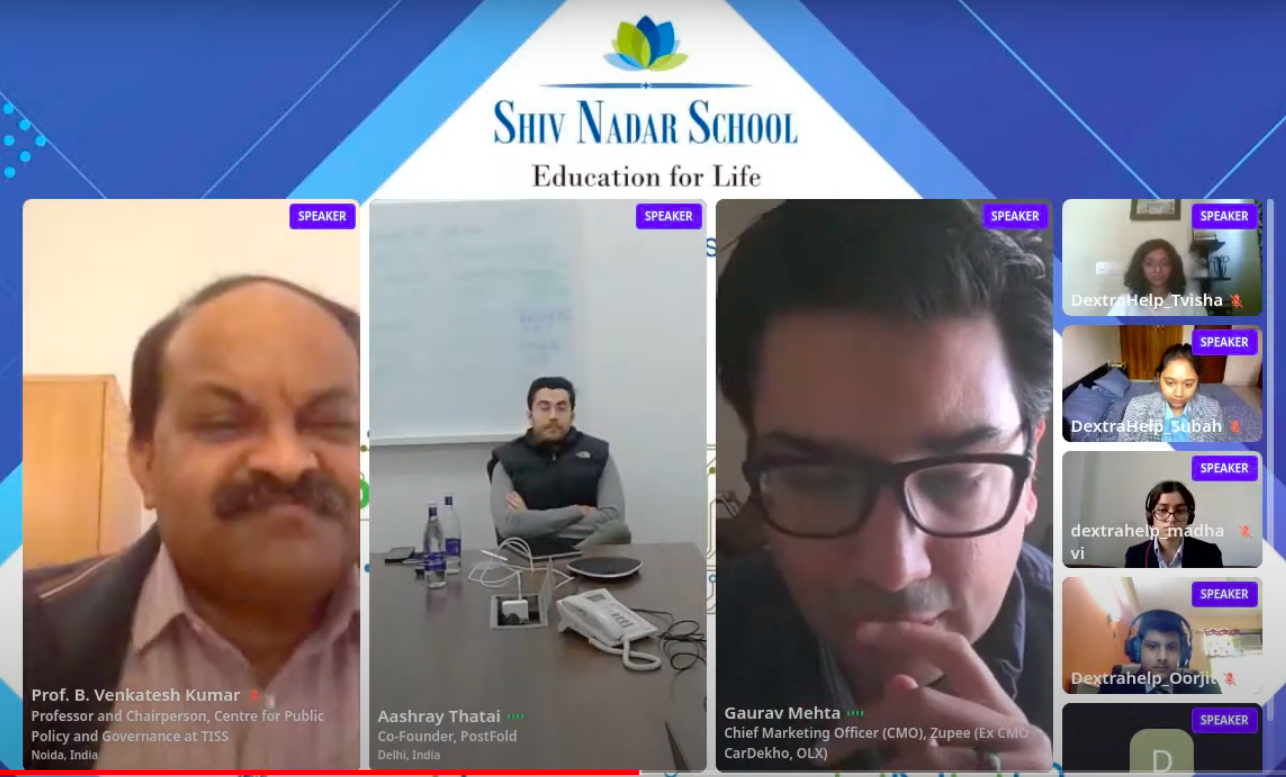
Our annual Capstone competition,Colloquium, proved that with intent and planning, even the most complex task can be accomplished with ease. Students presented their innovative ideas and product prototypes in the virtual Colloquium. The jury that reviewed the projects included Mr. Akshay Munjal (Founder CEO, Hero Vired), Mr. Gaurav Mehta (CMO Zupee), Dr. B Vankatesh Kumar (Chairperson Public Policy and Governance, TISS), and Mr. Aashray Thatai (Co-Founder PostFold). The esteemed judges, with ample industry experience and entrepreneurial acumen, appreciated the efforts of the students and shared suggestions for implementing the projects.

Judges reviewing the Capstone projects

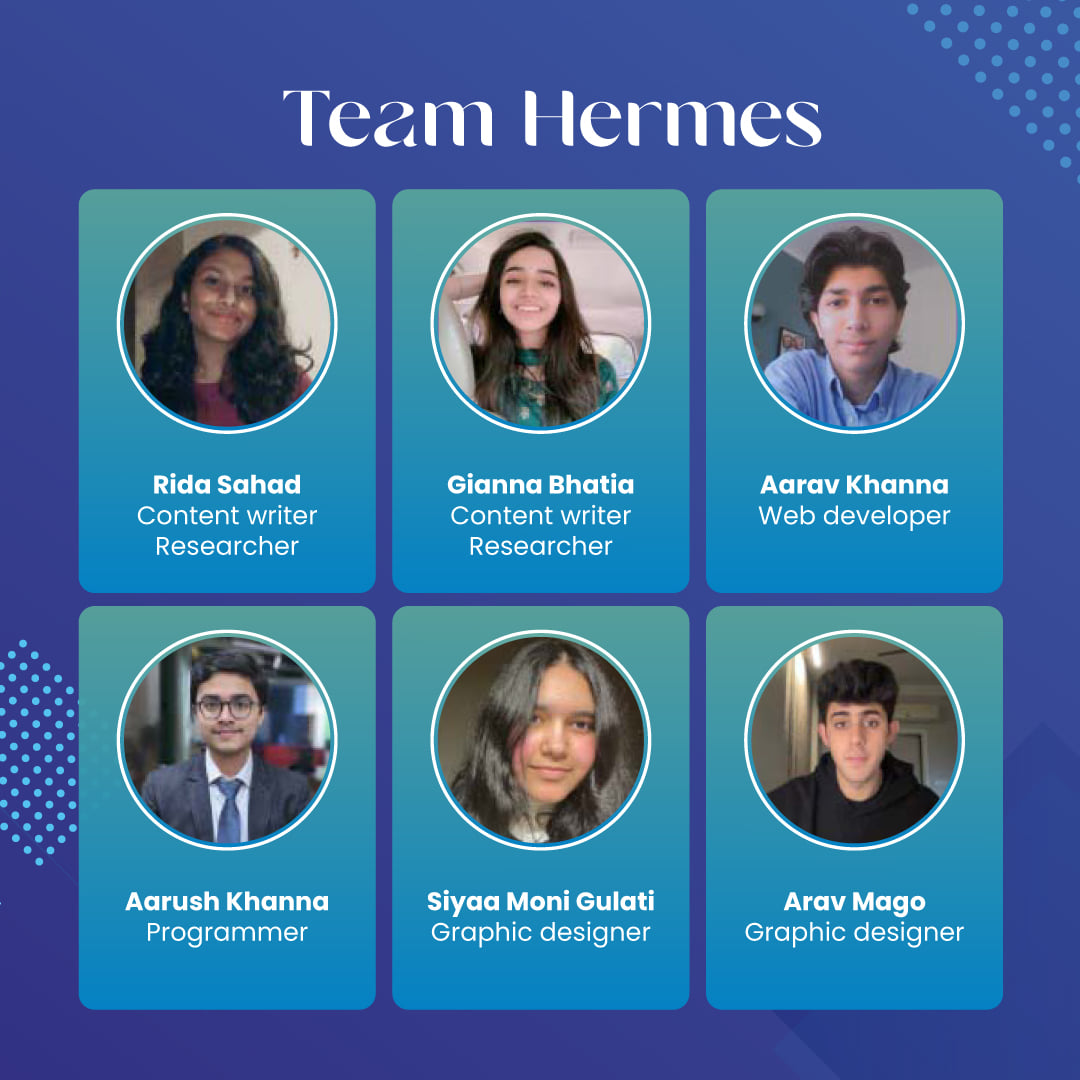
The team Hermes from Shiv Nadar School Gurgaon won the Colloquium by developing an app that will facilitate interactions with speech impaired people through sign language. The team has developed the complete indigenous sign language too. In the second place were team Dextrahelp, from Shiv Nadar School NOIDA. They have created an electronic gadget that helps control movements for people with Parkinson’s disease. This unique product will help the patients to perform everyday chores with ease. 

Team Hermes - Winner of Colloquium

Soaring with STEAM

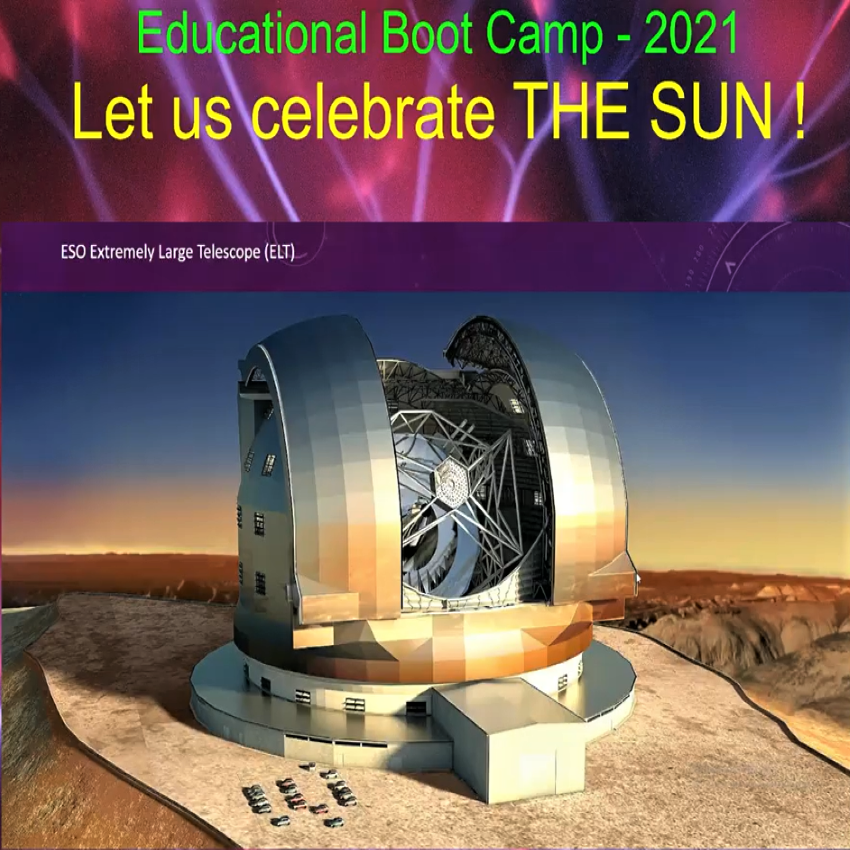
Another elaborate event was the second edition of theEducational Boot Camp, a month-long celebration of science with the theme ‘Let us Celebrate the Sun’. EBC 2 featured interactive sessions with international luminaries from St. Michael Observatory (France), TU Delft (Netherlands), and Kent Academy (USA). The highlight was a virtual visit to the ITER France Fusion Reactor site.

A view of the largest telescope

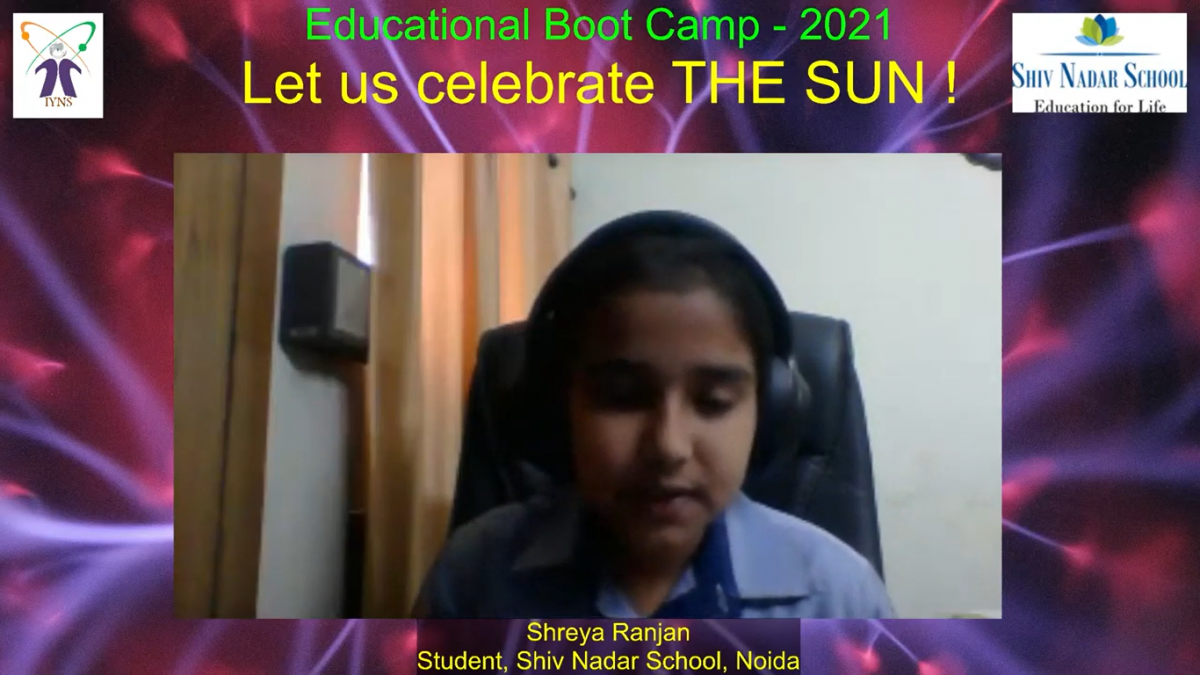
Students also presented their research projects based on the theme of the event. Shreya Ranjan, from Shiv Nadar School NOIDA, won the Dr. APJ Abdul Kalam Fellowship Award for her technical paper presentation on the Jantar Mantar.

Shreya Ranjan, Winner of EBC Project

Celebrating Diversity

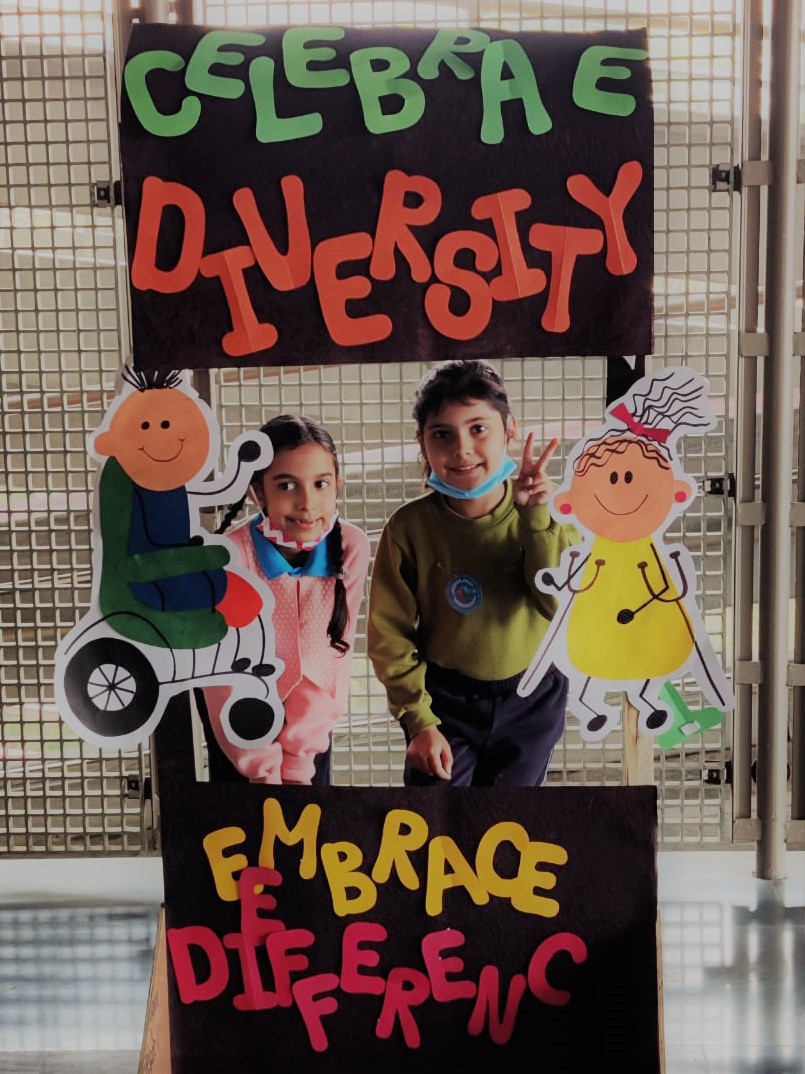
TheAbility Weeksaw a unique attempt to use technology for social good. It was observed across campuses to help students empathize with and empower differently-abled people. Children explored concepts like Life skills, Problem-solving, and Inclusivity with the help of facilitators and external experts. The students created posters, attempted to draw with foot and mouth, and learnt about how the skills of specially-abled people can be utilized.

Ability Week

Enjoyable Education

Funkaar, our unique approach to the integration of the Head, Hand, and Heart, proved to be a gala event. Students creatively explored and expressed themes like Water, Landforms and Shelter, Culture and Festivals, Habitat and Adaptation, and Market and Governance. They collaboratively worked on projects related to the assigned topics.

IT and Habitat - integration during Funkaar

A multidisciplinary bonanza, Funkaar saw students engaging in stories, artworks, puppet shows, and animated models. The culmination event, conducted virtually, was also shared with parents, and they appreciated the intriguing efforts by all students to understand and explain the complex topics.

International Achievements

Pranet Pahwa of Shiv Nadar School Faridabad won the MIT App Inventor – Appathon for Good 2021, hosted by the Massachusetts Institute of Technology. Pranet and his team were recognized as the People Choice Youth team for their app ‘Heal the World – Recycling Solutions for a better tomorrow’.

Pranet Pahwa

Saatvik Das and Siddhant Singhania of Shiv Nadar School Noida participated in the TTC Challenge for Data Science, competing against over 140 students from 5 continents. Finishing in the runners-up position, they won a chance to intern with Nacho Nwana, Founder and Gamemaster at Valfee.

Siddhant Singhania

Sanchit Kapoor, Grade 8, Shiv Nadar School Faridabad, participated in the Stem & Space International Asteroid Discovery Project. His discovery was one of the only 11 discoveries confirmed as provisional asteroid discoveries by the Minor Planet Catalogue (MPC) and will be formally recorded.

Equipped with pathbreaking ideas and technical acumen, our budding scientists aim for higher accomplishments. In our concluding post, we will look at how we have Evolved, buoyed by the experiences of a challenging year.

2022-04-19

Subscribe to Blog